
ประชุมปี 2024 https://www.gotoknow.org/posts/717128
เรื่องเล่าตอนที่ 32.1 การนำเสนองานวิจัยของ นพ.ยสวัต สุวรรณลิขิต และ พญ.นภสิริ พุทธันบุตร
ตอนที่ 32.2 นี้เป็นสรุปการนำเสนองานของ ผู้ได้รับพระราชทานทุนฯ ปี 2022 จำนวน 3 ท่าน ในการประชุมโครงการเยาวชนฯ Prince Mahidol Award Youth Program (PMAYP) Conference 2025 วันที่ 29 มกราคม 2568 ช่วงเช้า ที่ โรงแรมเซ็นทารา แกรนด์ แอท เซ็นทรัลเวิลด์ จัดเป็น side meeting (ประชุมย่อย) ห้อง Lotus 7 ชั้น 22
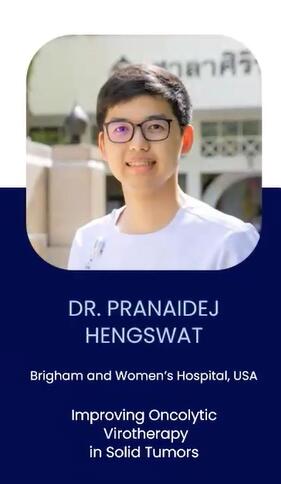
Presenter 3: นพ.ประณัยเดช เฮงสวัสดิ์ (Pranaidej Hengswat, M.D., ผู้ได้รับพระราชทานทุน ปี 2022)
Thai mentor
Prof. Pa-thai Yenchitsomanus, Ph.D.
Siriraj Center of Research Excellence for Cancer immunotherapy, Faculty of Medicine Siriraj Hospital, Mahidol University
Principle International mentor
Prof. E. Antonio Chiocca, M.D., Ph.D., FAANS
Department of Neurosurgery, Brigham and Women’s Hospital
Harvard University, USA
Co-international mentor
Hiroshi Nakashima, Ph.D. Department of Neurosurgery, Brigham and Women’s Hospital
Harvard University, USA
Topic: "Improving Oncolytic Viral Therapy in Solid Tumors"
Main Presentation Points
- Research Focus: Enhancing oncolytic herpes virus therapy to better target solid tumors, particularly glioblastoma (GBM) and cholangiocarcinoma.
-
Oncolytic Virus Mechanism:
- Selectively infects and replicates in tumor cells, sparing healthy cells.
- Induces tumor lysis and triggers anti-tumor immune responses.
-
Project Overview:
- Uses oncolytic herpes virus (oHSV) modified to improve its replication and immune-stimulating capabilities.
- Developed a new version of the virus (NG-34 IBP) that blocks Type I interferon (IFN) signaling, a potential tumor escape mechanism.
-
Key Findings:
- Patients with high Type I IFN levels before treatment responded worse to oncolytic virus therapy.
- Blocking Type I IFN in tumor cells improved viral replication and immune response.
- This approach extended survival in mouse models of glioblastoma.
-
Next Steps:
- Expand research into cholangiocarcinoma, a highly prevalent and deadly cancer in Thailand.
- Develop strategies to overcome tumor microenvironment barriers, such as cancer-associated fibroblasts (CAFs).
Mentor’s Main Message
กล่าวชื่นชม นพ.ประณัยเดช ที่มีทักษะการวิจัยอิสระ โดยตั้งข้อสังเกตว่า นพ.ประณัยเดช ได้ตั้งสมมติฐานของตนเองในการปิดกั้น IFN ประเภทที่ 1 (he developed his own hypothesis on blocking Type I IFN) ชื่นชมความสามารถในการวิเคราะห์ข้อมูลทางคลินิกและการออกแบบการทดลอง (Emphasized his ability to analyze clinical data and design experiments autonomously) นอกจากนี้ยังชื่นชมศักยภาพในฐานะนักวิทยาศาสตร์ศัลยแพทย์ โดยหวังว่าจะได้เห็นผลงานการตีพิมพ์เร็วๆ นี้ รวมไปถึงการสร้างความร่วมมือระหว่างกลุ่มวิจัยไทยและนานาชาติในอนาคต
ประเด็นสำคัญช่วงถาม-ตอบ
1. Comparing Brain Tumors to Other Solid Tumors
- Q: Are extracranial tumors (outside the brain) more responsive to oncolytic viral therapy due to the brain’s immune-privileged nature?
-
A: Yes.
- The brain has a suppressed immune environment, limiting viral therapy effectiveness.
- Extracranial tumors (like melanoma) show stronger immune responses to oncolytic viruses.
2. Pre-Existing Herpes Immunity & Therapy Response
- Q: Would patients previously infected with herpes simplex virus (HSV) respond differently to treatment?
-
A: Surprisingly, patients with pre-existing HSV immunity responded better.
- Immune response helped clear tumors faster.
- This is opposite to initial expectations, suggesting pre-existing immunity may enhance therapy effectiveness.
3. Expanding Research to Cholangiocarcinoma
- Q: Since cholangiocarcinoma is not an immune-privileged tumor, will blocking Type I IFN affect the immune response?
-
A:
- Cholangiocarcinoma is still highly immunosuppressive, similar to glioblastoma.
- The impact of Type I IFN inhibition in cholangiocarcinoma remains unknown and needs further study.
4. Targeting Cold vs. Hot Tumors
- Q: Will oncolytic virus therapy work better in cold tumors (low immune activity) or hot tumors (high immune activity)?
-
A:
- Some hot tumors (like melanoma) have already been successfully treated with oncolytic herpes virus (FDA-approved T-VEC therapy).
- This approach may also help convert cold tumors into hot tumors, making them more responsive to immunotherapy.
5. Cell Type Influence on Therapy Response
- Q: How do different tumor cell types affect oncolytic virus therapy?
-
A:
- Different tumors (even within cholangiocarcinoma) respond differently to the virus.
- Some tumor cell lines allow stronger viral replication, while others are more resistant.
- Customizing therapy based on tumor characteristics is crucial.
6. Future Research Directions
- Q: What are the next steps for your research?
-
A:
- Focus on cholangiocarcinoma, a high-priority cancer in Thailand.
- Address cancer-associated fibroblasts (CAFs), which create a barrier against oncolytic virus therapy.
- Optimize oncolytic virus design for better tumor penetration and immune activation.
Final Takeaways
- Oncolytic virus therapy is a promising strategy for treating glioblastoma and other solid tumors.
- Blocking Type I IFN may enhance viral replication and immune activation in glioblastoma.
- Pre-existing herpes immunity might improve treatment response rather than hinder it.
- Future research will focus on adapting oncolytic virus therapy for cholangiocarcinoma, overcoming immune barriers, and personalizing treatment.
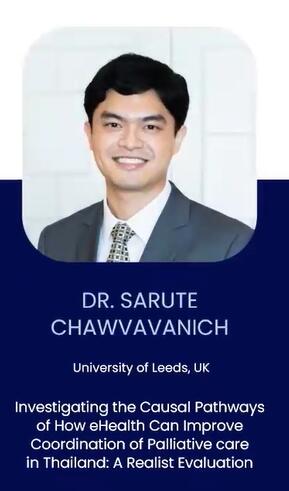
Presenter 4:นพ.ศรุต เชาวะวณิช (Sarute Chawvavanich, M.D., ได้รับพระราชทานทุน ปี 2022)
Thai mentor
Assoc. Prof.Borwornsom Leerapan, M.D., Ph.D.
Ramathibodi Medical School, Chakri Naruebodindra Medical Institute, Faculty of Medicine Ramathibodi Hospital, Mahidol University
International mentor
Assoc. Prof. Matthew J. Allsop, B.Sc., Ph.D.
Academic Unit of Palliative Care, Leeds Institute of Health Sciences, School of Medicine, University of Leeds, UK
Topic: Investigating how e-health can improve the coordination of palliative care in Thailand using a realist evaluation.
-
Realist Evaluation Approach:
- Instead of simply assessing whether an intervention works, realist evaluation examines what works, for whom, under what circumstances, and how.
- The approach considers different contexts and mechanisms influencing outcomes.
-
Palliative Care in Thailand vs. UK:
- The UK has a well-established digital system with national funding and security protocols.
- Thailand lacks a standardized electronic health record system, relying on informal tools like Line (similar to WhatsApp).
- Data fragmentation in Thailand leads to inefficiencies in care coordination.
-
Key Findings:
- Micro Level: Palliative care delivery appears effective, but data entry and security are weak.
- Meso Level: The UK has strong data-driven decision-making, while Thailand struggles with fragmented data.
- Macro Level: Thailand’s digital health strategy prioritizes large-scale coordination but overlooks frontline needs.
-
Challenges:
- Heavy reliance on informal tools for care coordination.
- Increased workload for providers due to multiple data entry platforms.
- Weak systemic data recording and security.
- Lack of integration between micro, meso, and macro levels, hindering quality improvement.
-
Opportunities for Improvement:
- Bridging the gap between frontline care needs and digital health strategies.
- Learning from both Thailand’s bottom-up approach and the UK’s top-down approach.
- Exploring sustainable funding and investment in digital transformation.
Mentor’s Main Message
กล่าวชื่นชม นพ.ศรุต ถึงความมุ่งมั่น มีความร่วมมือแบบสหวิทยาการ และมีทักษะในการสื่อสารที่มีประสิทธิภาพ งานตรงต่อเวลา ทั้งนี้ ประเทศไทยมีความก้าวหน้าที่น่าประทับใจในด้านการดูแลแบบประคับประคอง โดยมีการนำเสนอข้อมูลเชิงลึกที่มีคุณค่าสำหรับสหราชอาณาจักร การเรียนรู้แบบสองทิศทาง ถือเป็นสิ่งสำคัญ โดยทั้งสองประเทศ (ไทยและสหราชอาณาจักร) สามารถเรียนรู้จากจุดแข็งและความท้าทายของกันและกัน
นอกจากนี้ กล่าวเสริมว่า นพ.ศรุต มึความสนใจใคร่รู้ และเต็มใจที่จะสำรวจงานวิจัยใหม่ๆ นพ.ศรุต มีความใฝ่รู้และพร้อมจะเรียนรู้สิ่งใหม่ๆ มีความมุ่งมั่นและการคิดเชิงกลยุทธ์ (strategic thinking) เนื่องจากการวิจัยเชิงนโยบายด้านสุขภาพมีบทบาทน้อยในโรงเรียนแพทย์
ประเด็นสำคัญช่วงถาม-ตอบ
-
Main Barrier to a Unified Electronic Health Record in Thailand:
- Political and economic factors play a significant role.
- Power dynamics and resistance to change influence adoption.
- Requires deeper analysis of policy and stakeholder interests.
-
Comparisons with Other Countries’ Digital Palliative Care Approaches:
- The UK had major investments in digital health but still faces challenges.
- The U.S. context is too different to compare directly.
-
Why Focus on Digital Transformation?
- Dr. Sarute was inspired by inefficiencies in manual data entry observed during medical school.
- Digital transformation is necessary but must align with broader healthcare improvements.
-
Impact of Digital Transformation on Palliative Care:
- If done well, it can significantly improve patient and provider experiences.
- The UK has decades of experience but still struggles, showing the complexity of implementation.
-
Financial Investment in Digital Health:
- The Thai government is unlikely to invest large amounts in digital health compared to the UK.
- Realistic budgeting and prioritization are crucial.
-
Applying Findings to Other Healthcare Fields (e.g., Pediatrics, Stroke Care):
- The same digital coordination challenges exist in multiple areas of healthcare.
- A standardized approach could benefit various medical fields.
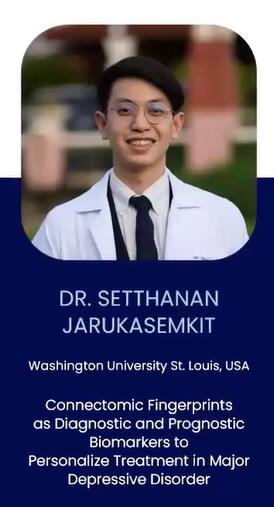
Presenter 5: นพ.เสฏฐนันท์ จารุเกษมกิจ (Setthanan Jarukasemkit, M.D.,ได้รับพระราชทานทุน ปี 2022)
Principle Thai mentor
Asst. Prof. Chaipat Chunharas, M.D., Ph.D.
Department of Neurology, Faculty of Medicine, Chulalongkorn University
Co-Thai mentor 4 ท่าน ดังนี้
1.Pirada Witoonpanich, M.D.
Division of Neurology, Department of Medicine, Faculty of Medicine Ramathibodi Hospital, Mahidol University.
2. Tantawan Awirutworakul, M.D.
Chakri Naruebodindra Medical Institute, Faculty of Medicine Ramathibodi Hospital, Mahidol University
3.Thanissara Chansakul, M.D., B.Sc.
Division of Diagnostic and Therapeutic Radiology, Department of Radiology, Faculty of Medicine Ramathibodi Hospital, Mahidol University
4.Witaya Sungkarat, M.D., Ph.D.
Faculty of Health Science Technology, HRH Princess Chulabhorn College of Medicine Science
International mentor
Assoc. Prof. Janine D. Bijsterbosch, Ph.D.
Department of Radiology, Washington University in St. Louis
USA
Topic: "Connectomic Fingerprint as Diagnostic and Predictive Biomarkers for Personalized Treatment in Major Depressive Disorder"
-
Background & Research Focus:
- The current "one-size-fits-all" model in depression treatment is ineffective.
- Precision psychiatry is emerging, aiming to personalize treatments using brain imaging and biomarkers.
- The study focuses on mapping brain networks (connectomics) to better predict treatment responses in depression.
-
Challenges in Depression Treatment:
- Traditional treatments (e.g., SSRIs) have a small effect size.
- Non-pharmaceutical treatments like exercise and mindfulness sometimes show better results.
- Depression is heterogeneous, meaning different subtypes may require different treatments.
- Brain imaging studies often have small sample sizes, leading to unreliable findings.
-
Key Findings:
-
Large-Scale Brain Mapping:
- Conducted a meta-analysis with 25,000 neuroimaging datasets.
- Found low correlation (around 0.2) between brain structure and depression symptoms, highlighting the complexity of the disorder.
-
Depression Subtyping:
- Compared different ways of classifying depression using clinical data, structural MRI, and functional MRI.
- Results showed no agreement between different subtyping methods, suggesting more work is needed to accurately categorize depression types.
-
Exploring New Brain Biomarkers:
- Investigated multiple neuroimaging markers, including structural MRI, functional MRI, and neurotransmitter imaging (e.g., GABA and glutamate levels).
- Found promising biomarkers but noted that more research is needed to validate them.
-
Focus on Transgender Mental Health:
- Studied depression in transgender women, who have a five times higher risk of depression compared to the general population.
- Plans to expand research by collecting 200 transgender participant datasets to understand unique mental health challenges in this group.
-
Large-Scale Brain Mapping:
-
Future Directions:
- Establishing a Thailand Brain Consortium to enhance neuroimaging research.
- Developing AI models to improve depression diagnosis and prediction.
- Using deep learning to harmonize neuroimaging datasets across international institutions.
- Advocating for multimodal neuroimaging to integrate various brain imaging techniques for better predictions.
Mentor’s Main Message
กล่าวชื่มชม นพ. เสฎฐนันท์ ว่าเป็นนักคิดที่สร้างสรรค์และชอบท้าทายบรรทัดฐาน มีพลังงานและความทุ่มเท ตลอดจนความสามารถในการจัดการโครงการพร้อมกันหลายโครงการ มีความตั้งใจในการทำงานร่วมกับกลุ่มวิจัยตนเองและภายนอกกลุ่มวิจัยตนเองในระดับและขอบเขตที่กว้างขึ้น แม้ว่าช่วงแรก จะไม่มั่นใจเกี่ยวกับการใช้ functional imaging สำหรับการวิจัยภาวะซึมเศร้าในประเทศไทย แต่รู้สึกประทับใจกับความก้าวหน้าที่เกิดขึ้น นอกจากนี้เน้นย้ำถึงความจำเป็นของชุมชนวิทยาศาสตร์ที่ผสมผสานการวิจัยเข้ากับการมีส่วนร่วมของสาธารณะ เช่น การผสานประสาทวิทยาเข้ากับศิลปะ
ประเด็นสำคัญช่วงถาม-ตอบ
-
How specific should depression research be vs. generalizing for public mental health?
- Answer: Mental health exists on multiple levels—biological, interpersonal, and societal.
- Research must balance biological insights with broader social and public health considerations.
- A multi-level approach is necessary, considering factors like genetics, environment, and policy.
-
How reliable are brain scans in diagnosing depression?
- Answer: Current brain imaging correlations with depression symptoms are weak (~0.1-0.2).
- Static models (single-time scans) are insufficient—future research should focus on dynamic changes over time.
- More advanced methodologies are needed for reliable biomarker identification.
-
How can brain circuits be linked to treatment?
- Answer: Existing antidepressants affect the entire brain, not specific circuits.
- Techniques like Transcranial Magnetic Stimulation (TMS) and Deep Brain Stimulation (DBS) are being explored for targeted treatment.
- Personalization of treatment is key—finding the right brain region for stimulation could improve effectiveness.
-
Can AI help in depression research?
- Answer: AI can assist in harmonizing large neuroimaging datasets and predicting depression severity.
- However, current AI models lack stability and reproducibility—further refinement is needed.
กล่าวปิดงาน โดย ศ.นพ.นิพนธ์ ฉัตรทิพากร
ข้อมูลเพิ่มเติมของผู้รับพระราชทานทุนฯ สามารถอ่านได้ที่ Booklet 2025
ข้อมูลโครงการเพิ่มเติมที่ http://pmayp.org
ดร.ภัทรพร คงบุญ
10 กุมภาพันธ์ 2568


