
Autumn Caterpillars
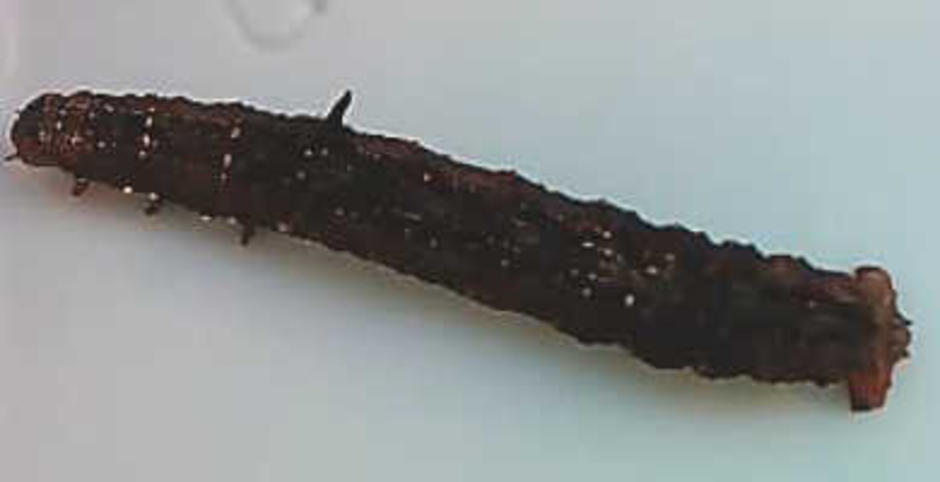
I walked into a web one morning and found a little black caterpillar dangling on the web. 'Poor thing got caught by a spider' I thought. I brushed the web off my face, tossed the caterpillar to the ground and went on my way.
This Autumn (2014; in Australia) is rather wet. We had some 200 mm of rains in one week. After praying for some rains for many long months, our house water supply is now back to full capacity, our trees are glossy green again. Our lawns need mowing before many grasses seed. The paddocks that had been brown and dry, is now covered with green carpet. The magic of water never ceases to amaze us. The morning dews twinkle in the early morning sunlight. The air is cool and fresh. Birds sing in trees. Roos graze on a grass patch over the dam. The world is so beautiful!
But a few days later, I noted some 50 caterpillars on the front doors. They were the same as the little one on the web. They varied in size from tiny 10 mm to large 45 mm long, blackish brown with 4-5 white dots on segments. We noted the way they move --arch up and inch out--. They have 3 pairs of legs in front (head end) and 2 pairs (of prolegs) at the other end with a pair of claws (or claspers) but no legs in the middle segments. One horn on their back just behind the last pair of front legs and another smaller horn on the back, between the last pair of prolegs and the claspers. (See pictures below.)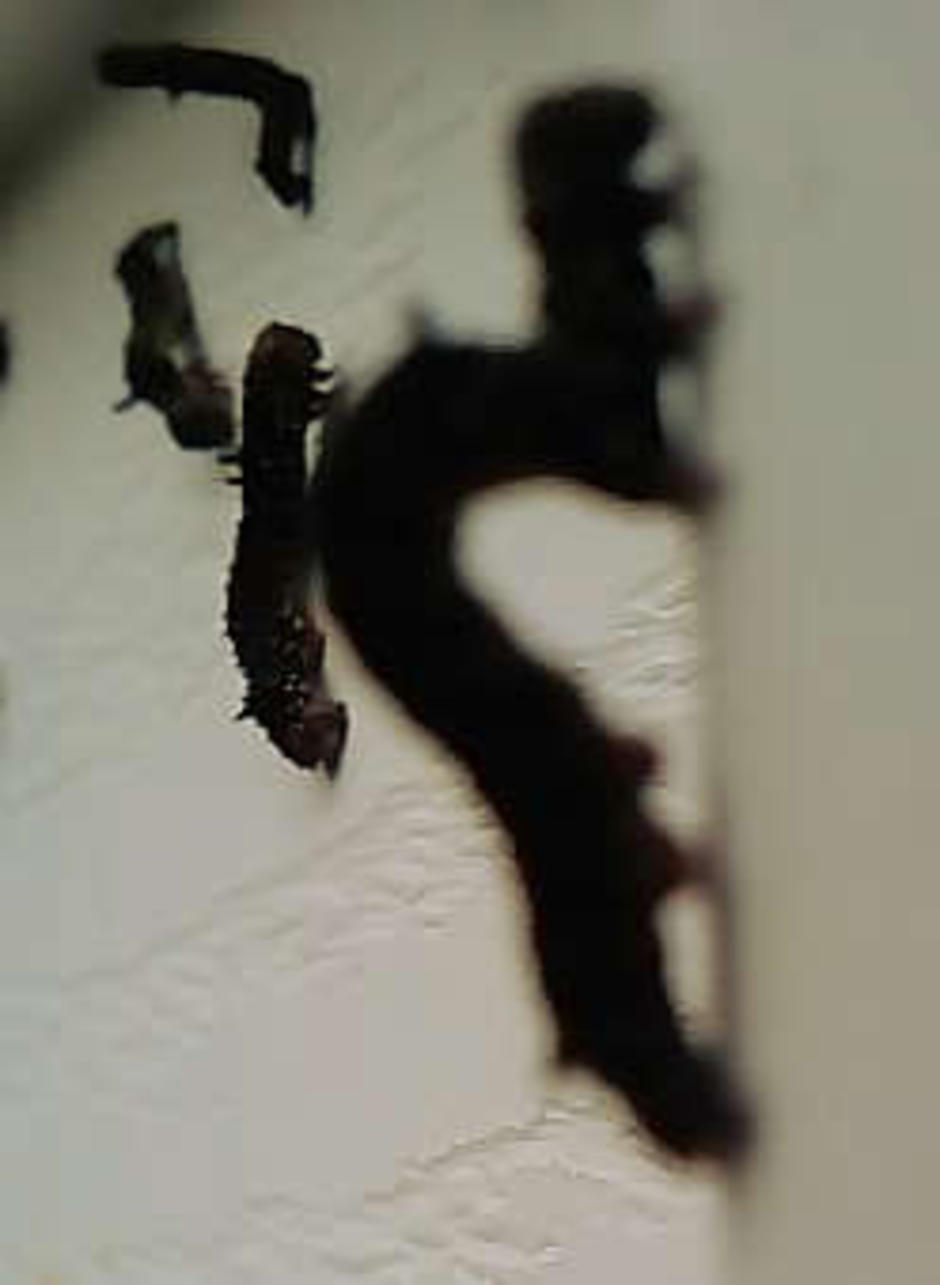
A day after that we saw more of them abseiling down on silklike threads from canopies of gum trees and wattles. Then we saw more of them on the outside walls of the house, fronts doors, windows, awnings, stairs and landings. Everywhere! We are invaded and surrounded by an army of millions caterpillars!
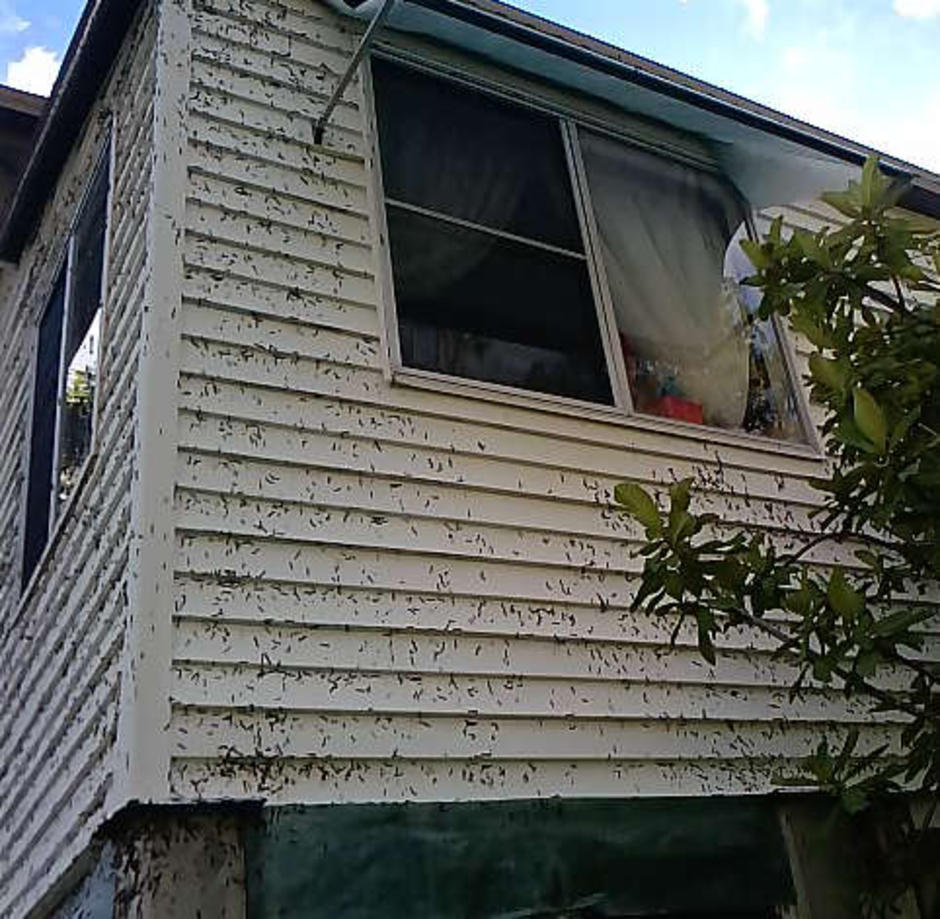
We looked around, our neighbors were also under the same situation. It was not an isolated or targetted attack on us. It was an outbreak or a plague --a natural phenomenon due to some peculiar conditions. We wished we could do a simple "Take me to your Leader". So we could ask questions like "Who are you? Where do you come from? Why are you here? ..." But, we had to take a more difficult path. We started taking pictures and specimens (errrh -- prisoners), and surveying the extent of this invasion. We looked up the Net. We asked other people. We watched and noted any out-of-ordinary thing --like: lorikeets have not come for feed for a few days now; wagtails have been missing from lawns and cloth hangers where they usually perch and swoop for insects; herons and egrets may have moved North to warmer places; and weeds like sticky beaks and burrs and so on are growing wild in great number too. These events may be due to change in season and not related to the caterpillars at all.
What makes this caterpillar plague interesting? First, they are here in great number -- in plague. Second they are here in Autumn rather than Spring like any other year. Why did their eggs not hatch last dry Spring that was followed by dry Summer? Do they know how to increase their species' chance of survival? Do they know how to forecast weather better than human scientists (using 30-million-dollars supercomputer system)? We have heard of catfish in Japan go into high activities before earthquakes in their areas. A more puzzling thing was that they did not seem to be feeding or looking for food. How long to go before they develop outer shells, and turn into cocoons and moths?
We looked up and learned from the Internet: the are some 26,000 different moths in Geometridae family. More than 20,000 species call Australia "home". Their caterpillars are often called 'inch worms' because of the way they move by arching up the middle part of their body with front legs firmly on the ground; moving the rear prolegs forwards and therefore lifting the middle section up; then lifting the front legs up and stretching their head out. They lay over 50 eggs on underside of native tree leaves. Many do hatch out in Autumn. One well known species in Australia is the 'Autumn Gum Moth' (See http://en.wikipedia.org/wiki/Mnesampela_privata). Our caterpillars only have 2 pairs of prolegs, but Autumn Gum Moth caterpillars have 4 pairs of prolegs and 2 distinct white spots on their back. The closest match we could find is 'oenochroma vinaria' (see http://en.wikipedia.org/wiki/Oenochroma_vinaria and http://lepidoptera.butterflyhouse.com.au/chro/vina... and note 2 yellow spots on the rear end).
Briefly, on another path to identify our invading caterpillars: our local council could not help; the local Department of Primary Industry (DPI) office suggested we tried the entomology section of the state museum - but the entomologist was on holidays. We sent some photos and details to a university entomologist and we are still waiting for a reply.
We decided to take a watch-and-wait approach. Come what may!
Then on day 7 of this invasion, we had a cold-snap. The night temperature plummeted to 7C when 12-14C was the usual. In the morning, we found many brown stains where caterpillars hanged on the white walls. After 3 nights of this coldsnap, there were more stains than stiffened caterpillars on the walls. The invasion seemed a doom now because of an unexpected weather.
We had taken in some caterpillars for observation. We offered them various leaves - natives and market vegetables. But they did not eat any. They spent 5 days in a glass bottle then they died. We were of course the cause of death in our quest to find out what kind of moth they were to be. We failed --morally and technically-- to care for lives in our 'detention camp'. No, we couldn't just say they died for science or human knowledge. Did we do this to benefit the caterpillars or moths?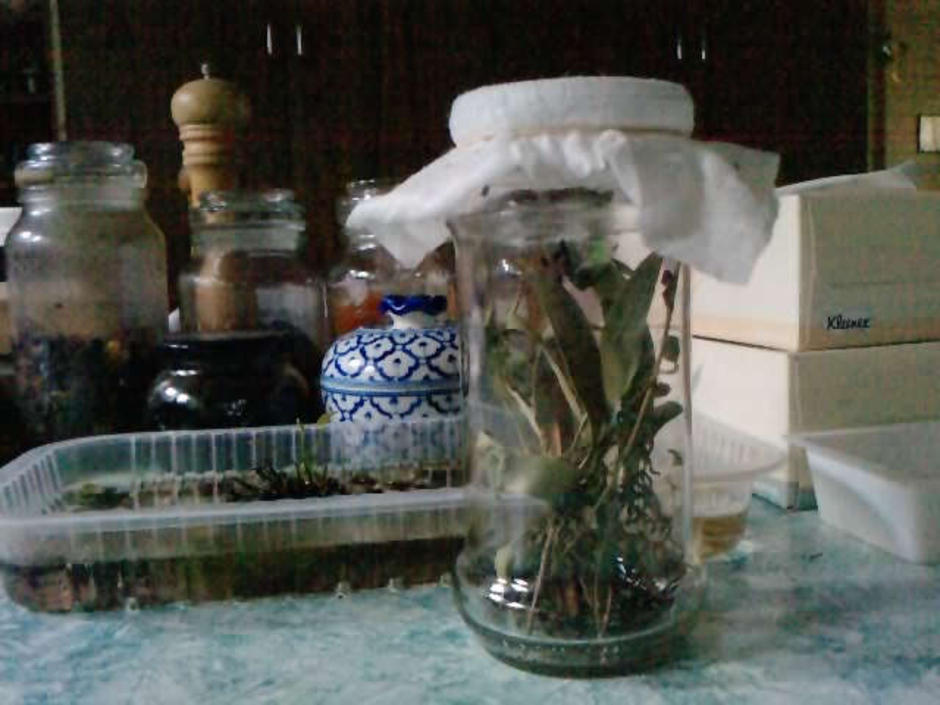
But this is not yet the end. Nature never ends but keeps on unfolding! We will follow this phenomenon further.
(Get up, go out, stretch your legs and let your imagination fly!)


เคยเห็นครั้งหนึ่ง..บ้านริมน้ำแควที่เมืองกานจน์..หนอนขึ้นบ้าน..ยุบหยับไปหมด..(ขนลุก)..เพราะเกิดมาไม่เคยเห็น...หนีภาพนั้นไป..มาเห็นอีกทีในบันทึกนี้...(ไม่ทราบเหมือนกัน..ว่าชาวบ้านที่อาศัยอยู่นั่นได้ทำอะไร..เพียงหนีไปไม่อยู่เสีย..แล้วมันก็คงหายไป..เหมือนตอนมันมา..)...เป็นธรรมชาติ..ที่ไม่เบียดเบียนและพยายามฆ่ากัน..มันจักหลีกกันไปตามมีและเกิด...
People who don't get used to carterpillars may see the situation you have met as an awful one.
There are various carterpillars found in my farm, most of them is the kind as shown in the picture below.
Dear ยายธี: I had never seen an outbreak of caterpillars (like this one) either. I had to shift into a Buddhist Mode to react to the situation without "lobha, moha, tosa". It wasn't easy to stay calm and follow the event as it unfolds.
Dear ไอดิน-กลิ่นไม้ : We have a few of those (in pics) too. They are beautiful butterflies when compared to moths. But somehow, moths are more numerous in varieties and numbers. (Has anyone written a comparison of butterfly and moth?) Are the leaves in last 2 pics from a 'sesbania' (แค) tree?
...ตอนเป็นหนอนผีเสื้อดูน่ากลัวนะคะ...แถมมีจำนวนเพิ่มมากขึ้นจากเดิม...ไม่รู้ว่าพอโตเป็นผีเสื้อหน้าตาจะเป็นยังไง?...ในความคิดส่วนตัว คิดว่าน่าจะต้องจัดแหล่งอาหารให้หนอนผีเสื้อ...ไกลออกไปจากบ้านเรือนอยู่อาศัย แล้วช่วยกันจับไปปล่อย...ต้นไม้ที่ใกล้บ้านต้องตัดกิ่งไม่ให้ละ หรือใกล้ตัวบ้าน ...แต่บางทีอาจไม่ได้มาจากต้นไม้ ...แต่มาจากดินรอบๆบริเวณนั้นที่มีไข่ผีเสื้อนะคะ...
อ่านสนุกเลยครับ ชอบใจ "Take me to your leader" ฮาๆๆ
อยู่กับธรรมชาตินี่น่าจะมีความสุขมากครับ ได้ค่อยๆ สังเกตความเปลี่ยนแปลงของธรรมชาติอย่างที่คุณ Sr ทำนี่ดีจริงๆ ครับ ผมอยากจะไปหาที่อยู่กับธรรมชาติกว้างๆ แต่ก็ยังติดอยู่ว่าเจ้าต้นไม้ยังต้องเรียนหนังสือที่หาดใหญ่ครับ
Are you sure they've had enough air to breath ?
Dear ดร. พจนา แย้มนัยนา : I did not exaggerate when I said we were invaded by millions of caterpillars. We still have problems with how to feed them. So far we found some bigger ones on some burr weeds and our pomegranate trees. There are a lot more burr weeds we;d gladly let them feed on burr weeds but not the pomegranates ;-)
Hi ธวัชชัย : Living close to Nature does have many romantic moments and ones can learn how Nature really works. We made our move from city to bush when our child was 8 years old. We thought that we would have served her better by giving her all opportunities to learn about Nature. She is now working with people in a city ;-) [Too much Nature can have side effects ;-) ]
Hi rojfitness : No! I am not sure. As you can see in a picture - the bottle (detention cell) was capped with linen which should allow air flow. Note also gum and wattle leaves for them to eat. Water was sprayed into the bottle. We tried what we knew about them. It is clear now we knew 'nothing' about them!