
ที่จริงแล้ว เนื้อหาเน้นหนักไปในเรื่อง Digital Mammography สำหรับ Mammographic Technologist แต่ก็มีเหตุผลนะคะ ทำไม?? ต้องอ่านค่ะ
The technologist’s role in evaluating new technology
เขียนโดย Stephen Archer : director of worldwide marketing of
mammography solutions for Carestream Health Inc.,
Rochester, N.Y. (www.carestreamhealth.com). Questions and
comments can be directed to [email protected].
A MAJORITY OF U.S. MAMMOGRAPHY SCREENING SITES are considering implementing digital technology for mammography screening within the next three years. About one-fourth of all sites already have at least one digital imaging system.
With this dramatic change on the horizon, it's important for mammography technologists to understand the challenges and the benefits digital systems can offer.
Technologists can expect to play an important role in the evaluation of digital technologies since these decisions often involve a team-based purchasing approach comprised of administrators, technologists, radiologists and other users.
One of technologists’ primary responsibilities will be to evaluate systems in terms of ease of use, productivity and workflow.
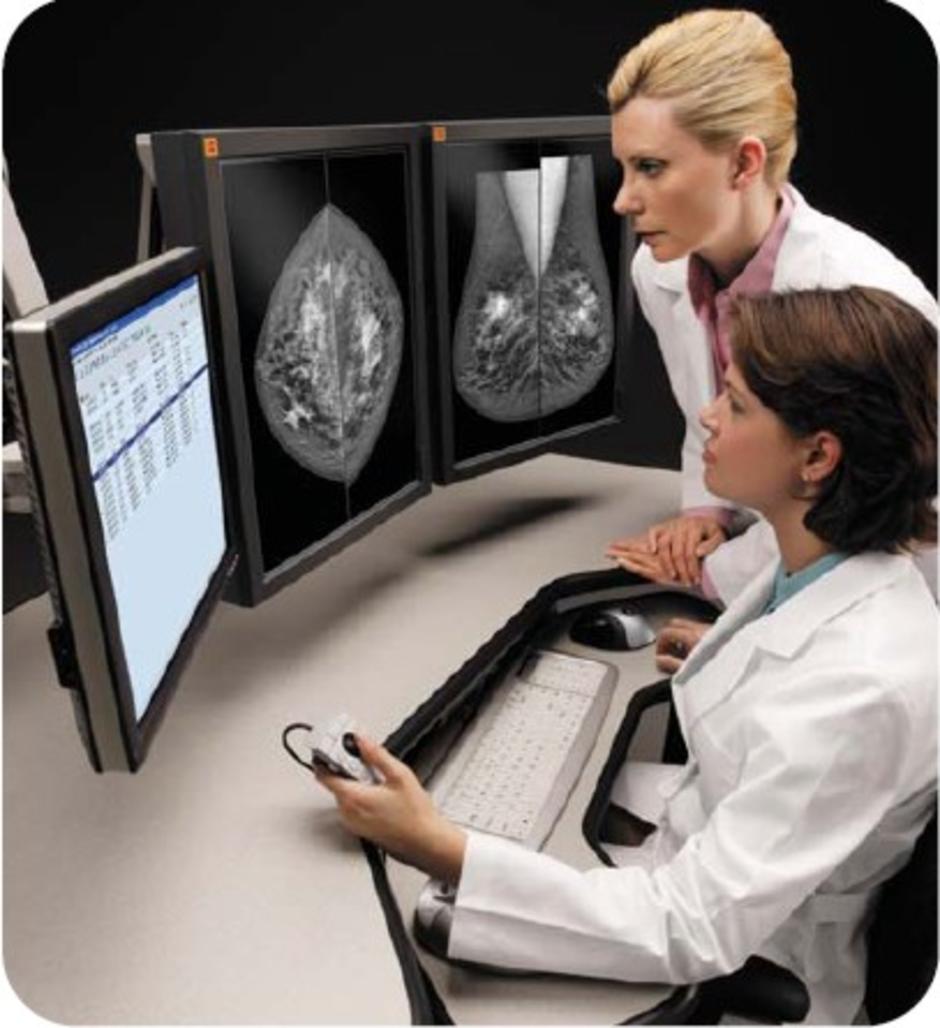
They may participate in the demonstration and testing of different systems and need to be prepared to compare the time and steps required to capture and perform quality control (QC) on images with various systems. It might also be wise to develop a checklist of items related to the user interface and image capture procedure to help standardize the evaluation.
Of course, technologists have unique insights into the patient experience since they receive feedback from patients on wait times, their satisfaction
with the exam process, and questions about radiation dose and other issues. Techs are in an excellent position to act as the “voice of the patient” and relay their expectations and desires as the staff designs a new digital workflow.
Market Consolidation
The timing is right for mammography to join the digital revolution. There is continued consolidation in the U.S. mammography market, as demonstrated by declining numbers of mammography providers published by the U.S. FDA. About 25 percent of all providers perform more than 100 mammography exams per week, and these volumes are expected to increase as the population ages.
This consolidation creates higher patient workloads for many facilities and drives a greater emphasis on productivity, especially for screening exams. The pressure on technologists to enhance productivity can be expected to increase, but efficient digital solutions will help staff handle growing patient volumes.
The need for efficiency and productivity extend to the complex quality control process for mammography exams. Testing, monitoring and maintaining processor chemistry is a task that normally falls to the lead mammography technologist at each facility. Digital technology promises to greatly simplify quality assurance with QC software that evaluates system performance and notifies the technologist of any variances. I believe it is safe to say that no one will miss the occasional challenges of chemical processing – although the days of chatting by the processor will be long gone, too.
Understanding the Basics
In the move to digital, mammography providers will be choosing between computed radiography (CR) and digital radiography (DR) technology, which is represented by full-field digital mammography (FFDM) systems.
Fortunately, mammography staff can draw upon years of experience in general radiology environments with both platforms to develop appropriate expectations in terms of workflow and user requirements.
FFDM systems are more expensive but offer immediate digital capture, with images available for review within just a few seconds. CR systems are very affordable but require the use of a cassette that must be scanned before images can be viewed. Both technologies offer excellent image quality and the ability to perform electronic image adjustments to enhance visualization of clinically significant anatomy.
It will be important for technologists to understand the workflow advantages of each technology and how the user interface functions. Technologists who do not have experience with digital imaging should try to visit a radiology department or imaging center where CR and DR systems are in use.
Imaging centers and radiology departments with a mixed environment may elect to share digital systems between general radiology and mammography exams. This scenario may involve the use of CR platforms that support the processing of both mammography and general radiography cassettes at the same reader.
Image Management and Storage Issues
“Going digital” starts with a capture device, but it also requires designing a new workflow for images, which involves RIS, PACS, specialized breast imaging workstations and digital archiving. Technologists need a basic understanding of an all-digital imaging workflow because they will be responsible for linking patient information with images and sending these imaging studies to radiologists for reading.
Creating an efficient all-digital environment involves obtaining patient data from a RIS and integrating that data with a PACS for image management and storage. In addition to providing patient identification and exam information, the RIS can automate mammography-specific activities, including sending reminder letters for annual exams, producing customizable patient letters for screening and diagnostic exams and other functions.
Working with the RIS, the PACS can facilitate the flow of images through the organization, from viewing to reporting, storage and disaster recovery/backup.
Making sure your facility has enough digital storage capacity quickly becomes a major issue, since the average file size of one mammogram on a CR system may be as high as 200 megabytes. Therefore, a facility with 20 screenings a day needs to plan to manage up to 20,000 megabytes (20 gigabytes) of new images a week. Even with lossless compression, this data will consume at least 7 to 10 gigabytes of storage weekly, or 28 to 40 gigabytes per month.
Viewing mammography images has special requirements, including 5 megapixel monitors, and some specialized functionality. Therefore, standard PACS workstations cannot be used for mammography reading.
Multimodality breast imaging workstations streamline workflow by enabling the reading of all breast imaging modalities, including CR, DR, ultrasound and MR. These workstations can also be used for general radiology exams, which creates an ideal platform for many healthcare providers.
Changing Times
A time of change is also a time of opportunity. Technologists should seek out opportunities to be involved with the evaluation of digital technologies and take steps to make a valuable contribution. Visit mammography and general radiography providers where CR and DR technology are in use, and talk to technologists about the challenges and advantages of each. And if you currently work with DR or CR, take the time to educate your mammography colleagues about the technology. Read journal articles to gain an understanding of how each technology captures images and learn what changes you can expect in patient positioning and workflow. Complete continuing education courses that focus on digital technology.
Implementing the right digital technology can improve a facility’s success and advance the careers of those involved in heading up the transition. There has never been a better time to start these preparations, because the mammography marketplace is finally getting serious about going digital.


เห็นด้วยกับ Stephen Archer และอาจารย์ครับคงจะปฏิเสธไม่ได้ว่างานทางด้านรังสีในยุคปัจจุบันและอนาคตภายหน้าจะไม่เกี่ยวข้องกับโลกทางดิจิตอล ยุคแห่งการติดต่อสื่อสาร ความสะดวกและรวดเร็วไม่ว่าจะเป็นงานทางด้านรังสีสีวินิจฉัย, เวชศาสตร์หรือแม้กะทั้งรังสีรักษา เทคโนโลยีต่างๆ ที่เข้ามาอยู่เสมอ เราชาว Technologist พึงมีการพัฒนาองค์ความรู้และแสวงหาเพิ่มเติ่มต่อไปเพื่อที่จะก้าวให้ทันและเคียงคู่ไปกับเทคโลโลยีที่เจริญก้าวต่อไปไม่หยุดยั้ง.
ประโยคนี้ถูกใจ Aj มากค่ะ
"เราชาว Technologist พึงมีการพัฒนาองค์ความรู้และแสวงหาเพิ่มเติ่มต่อไป เพื่อที่จะก้าวให้ทันและเคียงคู่ไปกับเทคโนโลยีที่เจริญก้าวต่อไปไม่หยุดยั้ง"