
จาก บันทึกนี้ ผู้เขียนได้จดความรู้และข้อคิดเห็นที่ได้จากอาจารย์ผู้บรรยาย...ทั้งๆที่หลายคนมองว่าสมัยนี้เขาไม่จดกันแล้ว....
แต่เพราะผู้เขียนเป็นคนมีความจำไม่ดี ไม่สามารถจดจำได้ในทันที มักต้องใช้เวลานานมากในการอ่านทำความเข้าใจ จึงนิยมอ่านทวน...อ่านซ้ำแล้วซ้ำเล่า จึงจดจำได้...(และผู้เขียนเองมักจะเลือกทำเฉพาะในเรื่องที่ตัวสนใจ ใส่ใจซะด้วย... ซึ่งเป็นสิ่งที่ไม่ดี ทำให้ความรู้ตกหล่น..)
 หากความรู้ที่จดเก็บไว้ยังอยู่ในกระดาษ...นานวันคงสูญหายไปพร้อมกับผู้เขียน... เลยถือโอกาสนำมาจดทิ้งไว้ในบันทึก...แม้มันจะเป็นเพียงเศษเสี้ยวความรู้ของวันนั้นก็ตาม....
...ขอบันทึกลงเฉพาะส่วนที่เป็นข้อคิดที่อาจารย์พลพันธ์ บุญมากถ่ายทอดออกมา...มากกว่าเนื้อหาวิชาการซึ่งสามารถอ่านเพิ่มเติมได้

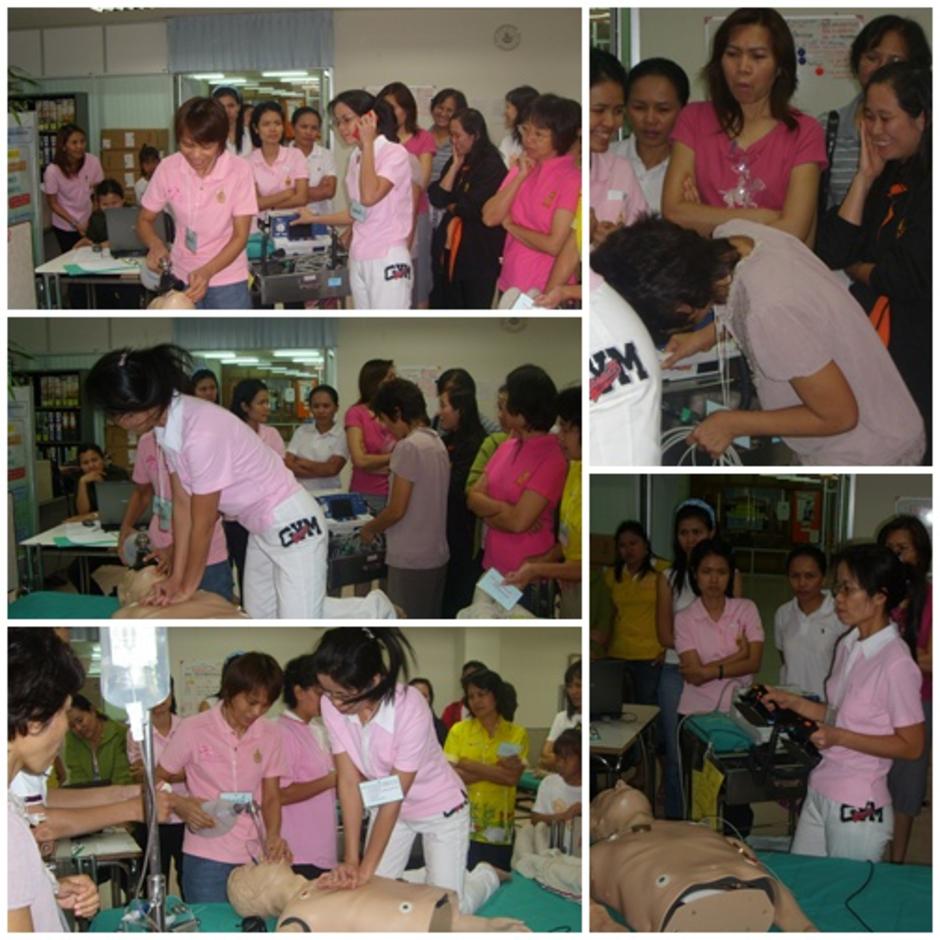
วัตถุประสงค์การอบรม
1. เพื่อทบทวนความเข้าใจเกี่ยวกับการกู้ชีพ
2. เข้าใจการพัฒนาการดูแลผู้ป่วยกู้ชีพ
การกู้ชีพ (Cardiopulmonary Resuscitation = CPR) คืออะไร?
.....อาจารย์กล่าวว่า.... คือ กระบวนการที่ทำให้ระบบไหลเวียนเลือดกลับมา
“....เป็นการทำยังไงก็ได้ให้คนไข้ซึ่งกำลังจะตาย กลับคืนมา และในปัจจุบันได้เพิ่มคุณภาพของการกลับมาอีกด้วย...นั่นคือพยายามให้สมองกลับมาปกติให้ได้มากที่สุด...เป็นเรื่องของ cardio กับ cerebral เป็นส่วนใหญ่...พยายามให้มี perfusion ไปสมองตลอดเวลา...”
“....ACLS Core Concept
· Outcome สัมพันธ์กับ good BLS (Basic Life Support) Care และมีส่วนที่เสริมเพื่อเพิ่มประสิทธิภาพที่เป็น advanced....”
สาเหตุของ Cardiac Arrest
6 T’s
· Toxin "Tablets" (overdose)
· Tension Pneumothorax
· Tamponade
· Thrombosis of coronary artery
· Thrombosis of pulmonary artery
· Trauma
6 H’s
· Hypovolemia
· Hypoxia
· Hydrogen(acidosis)
· Hypo/hyperkalemia
· Hypothermia
· Hypoglycemia
มีคำแนะนำ.............
“...CPR ที่สำคัญ คือทีมที่ดี ได้แก่
1. มีการสื่อสารแบบ closed loop
2. คำสั่งชัดเจน
3. หน้าที่ชัดเจน
4. รู้ข้อจำกัดของแต่ละคน เช่นบุคลากรอาวุโสด้วยวัยวุฒิ
5. มีการแบ่งปันความรู้
6. ทำงานอย่างสร้างสรรค์และเคารพกันและกัน
7. ประเมินซ้ำและสรุป โดยมีแนวคิดว่าทุกทีมมีโอกาสพัฒนา…”
อาจารย์กล่าวในตอนท้ายซึ่งผู้เขียนชอบมาก
“....การ CPR ไม่ใช่การทดลอง.... การฝึกหัดควรทำในหุ่นทดลองเพราะทุกวินาทีมีความสำคัญกับคนไข้ และที่เราต้องฝึกซ้อมเพราะในชีวิตจริงเราจะได้ทำอย่างมีประสิทธิภาพ....”
“...ผู้ร่วมทีมควรทราบหน้าที่ของตน เตรียมการตอบสนอง มีทักษะ เข้าใจแนวทางการ CPR และที่สำคัญคือ มั่นใจในความสำเร็จ...”
“...จะ CPRนานแค่ไหน? คำตอบคือ ไม่รู้... แต่ที่สำคัญคือการกดหน้าอกอย่างมีประสิทธิภาพเพื่อยื้อเวลาในการหาสาเหตุและการแก้ไข....”
...ขอบันทึกลงเฉพาะส่วนที่เป็นข้อคิดที่อาจารย์ถ่ายทอดออกมา...มากกว่าเนื้อหาวิชาการ
ส่วนเนื้อหาที่ไม่ได้บันทึกลงไว้เช่น
· EKG แบบใดไม่ต้องทำการกู้ชีพ?
· แนวคิดการช่วยฟื้นคืนชีพ
· ขั้นตอนการช่วยฟื้นคืนชีพ
· การประเมินและการจัดการ BLS
สามารถอ่านเพิ่มเติมได้เช่น ที่นี่ ค่ะ
1. http://www.erc.edu/index.php/guidelines_download_2005/en/?
2. http://www.vajira.ac.th/anset/files/Adult%20BLS2005.ppt
3. http://www.si.mahidol.ac.th/km/cops/cpr/knowledgeclick2.asp?id=31
4. http://www.bcnnon.ac.th/download/bcnnon/CPR1.pdf
5. http://www.medchula.com/question.asp?class=54&gid=1045
6. http://doc.surinhospital.net/ed-office/department/web%20acls2000/ACLS%20pea.htm
( ผู้เขียนชอบ บันทึกนี้ ค่ะ แต่ไม่สามารถ login เข้าไปเพื่อขออนุญาตและขอบคุณได้ จึงขอผ่านมาในบันทึกนี้ก็แล้วกัน)
Guidelines for prevention of in-hospital cardiac arrest
The following strategies may prevent avoidable inhospital cardiac arrests.
1. Provide care for patients who are critically ill or at risk of clinical deterioration in appropriate areas, with the level of care provided matched to the level of patient sickness.
2. Critically ill patients need regular observations: match the frequency and type of observations to the severity of illness or the likelihood of clinical deterioration and cardiopulmonary arrest. Often only simple vital sign observations (pulse, blood pressure, respiratory rate) are needed.
3. Use an EWS system to identify patients who are critically ill and or at risk of clinical deterioration and cardiopulmonary arrest.
4. Use a patient charting system that enables the regular measurement and recording of EWS.
5. Have a clear and specific policy that requires a clinical response to EWS systems. This should include advice on the further clinical management of the patient and the specific responsibilities of medical and nursing staff.
6. The hospital should have a clearly identified response to critical illness. This may include a designated outreach service or resuscitation team (e.g. MET) capable of responding to acute clinical crises identified by clinical triggers or other indicators. This service must be available 24 h per day.
7. Train all clinical staff in the recognition, monitoring and management of the critically ill patient. Include advice on clinical management while awaiting the arrival of more experienced staff.
8. Identify patients for whom cardiopulmonary arrest is an anticipated terminal event and in whom CPR is inappropriate, and patients who do not wish to be treated with CPR. Hospitals should have a DNAR policy, based on national guidance, which is understood by all clinical staff.
9. Ensure accurate audit of cardiac arrest, ‘false arrest’, unexpected deaths and unanticipated ICU admissions using common datasets. Audit also the antecedents and clinical response to these events.
In-hospital resuscitation
After in-hospital cardiac arrest, the division between basic life support and advanced life support is arbitrary; in practice, the resuscitation process is a continuum and is based on common sense.
The public expect that clinical staff can undertake cardiopulmonary resuscitation (CPR). For all in-hospital cardiac arrests, ensure that:
• cardiorespiratory arrest is recognised immediately
• help is summoned using a standard telephone number
• CPR is started immediately using airway adjuncts, e.g. a pocket mask
and, if indicated, defibrillation attempted within 3 min
The exact sequence of actions after in-hospital cardiac arrest will depend on many factors, including:
• location (clinical/non-clinical area; monitored/ unmonitored area)
• training of the first responders
• number of responders
• equipment available
• hospital response system to cardiac arrest andmedical emergencies,
(e.g. MET) cardiac arrest team
(ที่มา: http://www.erc.edu/index.php/guidelines_download_2005/en/?)
European Resuscitation Council (ERC) Guidelines for Resuscitation 2005 เป็นเนื้อหาที่น่าสนใจมากๆ ในส่วนของบริการวิสัญญี เท่าที่อ่านคร่าวๆก็น่าจะให้ความสนใจใน ส่วนที่ 7 มากหน่อยค่ะ เพราะหลายสาเหตุที่เราอาจจะต้องเผชิญขณะดมยาสลบ
(Section 7. Cardiac arrest in special circumstances : Jasmeet Soar และคณะฯ)
...แนวทางการ CPR ในเด็กก็มีต่างหากค่ะ....
(ขอขอบคุณ : อ.พลพันธ์ บุญมาก ผู้บรรยายที่จุดไฟให้ผู้บันทึกสนใจอ่านต่อเพิ่มเติม และขอขอบคุณ website ต่างๆที่กล่าวมา ที่เอื้อให้ผู้เขียนสามารถเข้าไปศึกษาได้อย่างสะดวก และนำมาเผยแพร่ให้บุคลากรที่เกี่ยวข้องและสนใจรับทราบได้ อันเป็นกุศลยิ่งค่ะ)


สวัสดีค่ะคุณติ๋ว เพื่อนรัก
ขอบคุณค่ะ นับถือค่ะ รายงานได้ละเอียดมากๆค่ะ
CPR เสี้ยวชีวิตจริงๆครับ
สวัสดีค่ะ ครูอ้อย เพื่อนรัก
เรียน ท่านอ. JJ