
A team of villagers were sponsored by forest-protection project. They planed to set up a forest inspection survey to find the border of forest in their area. I asked for permission to go with them. They allowed me to go. So, thirteen strong men with lots of forest trekking experience and a know-nothing-about-forest dentist came together in to the wild.
This is the experience that I will never forget. A nine hours walk up and down four-five mountains is not a forgettable event of one’s life. Moreover, I learnt many things while I’m in the forest.
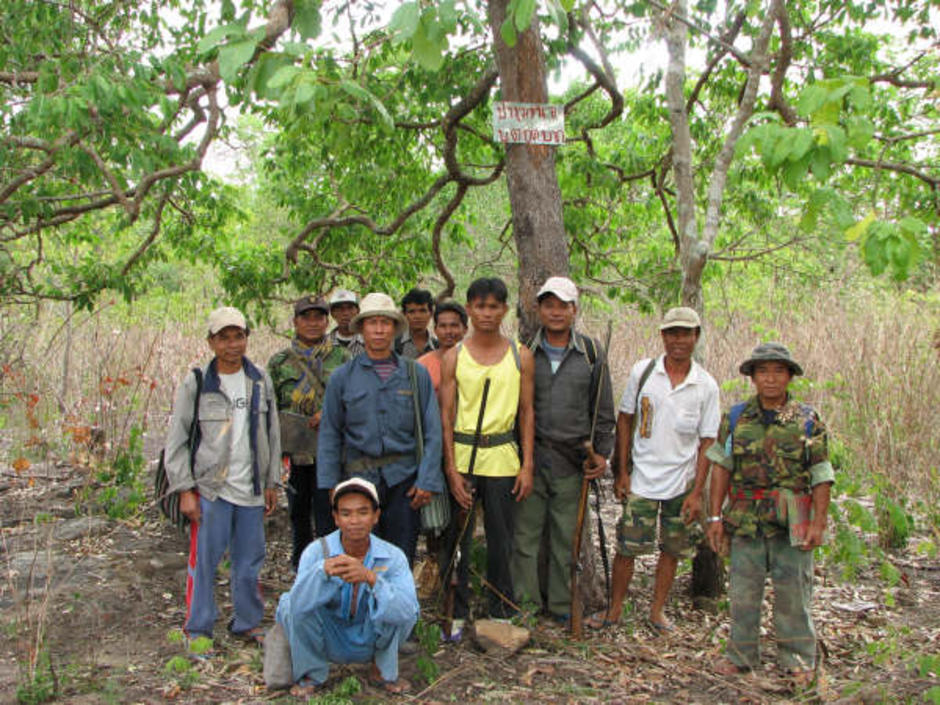
Community forest rangers
I saw lots of burnt areas in the forest caused by bush fire. I know later that ninety percent of bush fire in this area is man made. People burn forest to hunt animals, they burn to wash out the day leaves, they burn to gain more land for cash crop, they burn to for new fresh grass for their cattle, they burn for mushroom to grow etc. I think burning forest is very common activity in their everyday life.
I saw lots of trees that were cut illegally. Every ranger knows who cut the trees and who the authorities behind the curtain are. They said it’s OK (even it’s illegal) to cut trees to make new house for their children when they get married. By cutting only for own use would not affect the balance of the forest. But nowadays people from other villages came to cut trees to sell. So the situation of deforestation in their area is very urgent issue to solve. This is why the ranger teams need to be formed. This team is financially supported by INPAENG network.
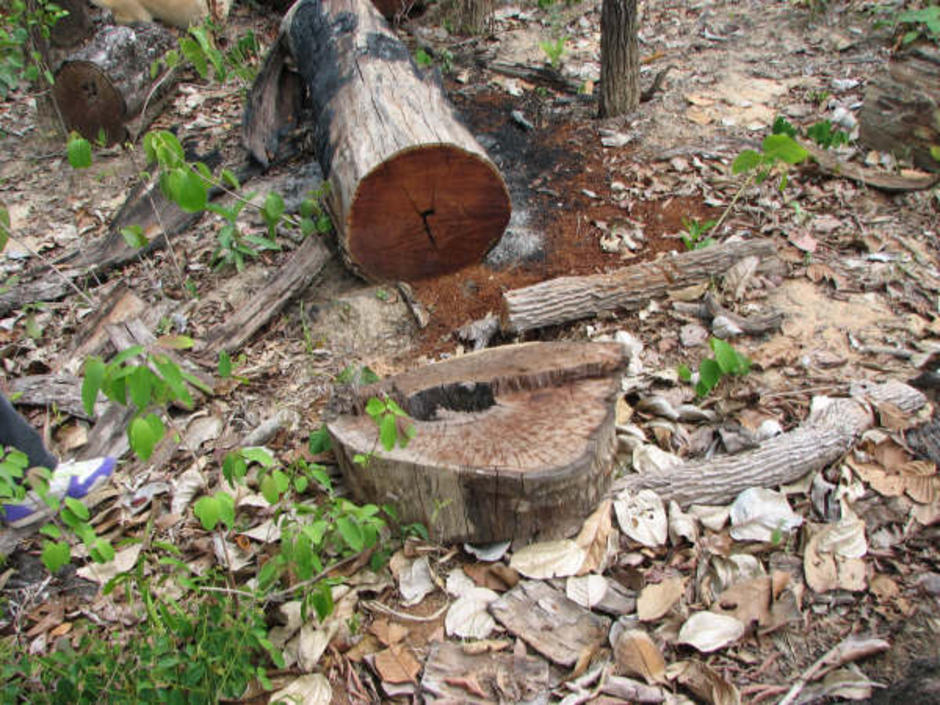
Deforestation
I felt that all the men in this team are forest-professional. They knew the way to walk, know what leaf can be eaten. They knew where clean water is. They walked quickly on very tough tracks using only slippers while I felt very hard to walk or to keep balancing on the rocky, up-and-down and slippery ground even I used ‘new balance’ sport shoes.
I would be died if they let me alone in the forest because I don’t know what are safe to eat and where the clean water is. But for them, being in the forest is like shopping in a big supermarket.
Following them to the forest confirm my hypothesis that for them and lots of Isan (North-eastern) people health = family+forest. While family members give psychological support, forest gives physiological support. Forest gives Forest gives food, water, medicine, accommodation, cloth moreover the very green forest is the ‘training camp’ for forest monks to practice the meditation and finally to be enlighten. So keeping the forest sometimes means to assure that our country will not lack of the enlighten ones.

In the wild
This confirmed me the INPAENG lifestyle ‘to move Bhu Pan forest to your backyard’ means grows verity of trees that family need to by yourself, in your land and use them. So INPAENG members go into the forest to find seeds or baby plants to grows, not to cut. Moreover they analyzed the usage of trees in sixteen categories eg trees for eat, for oil, for building house, for save the water, for herbal medicine, for bugs expelling etc.
So, for me their health is not link only with health service or social determinants as be written on the book. I found health of people here link tightly with forest.
For them, forest = clean food, clean air, clean water, shade, recreation, spiritual sanctuary etc.
I think this is very interesting when we think about issue that WHO propose on their website http://www.who.int/globalchange/ecosystems/en/. I think it’s impossible not to include this issue in the health promotion activities esp. for people in rural areas, people that have their own land for agriculture.


