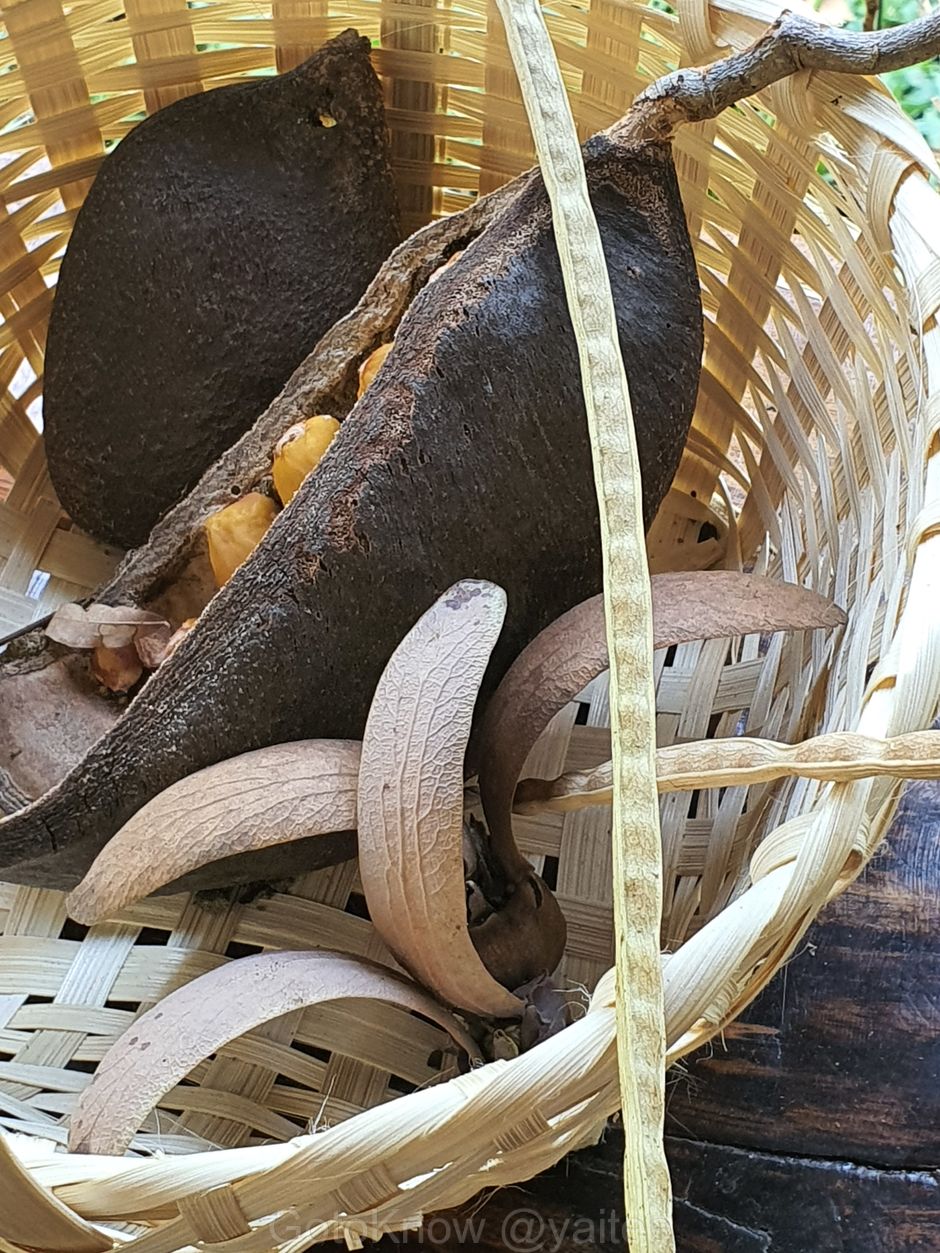
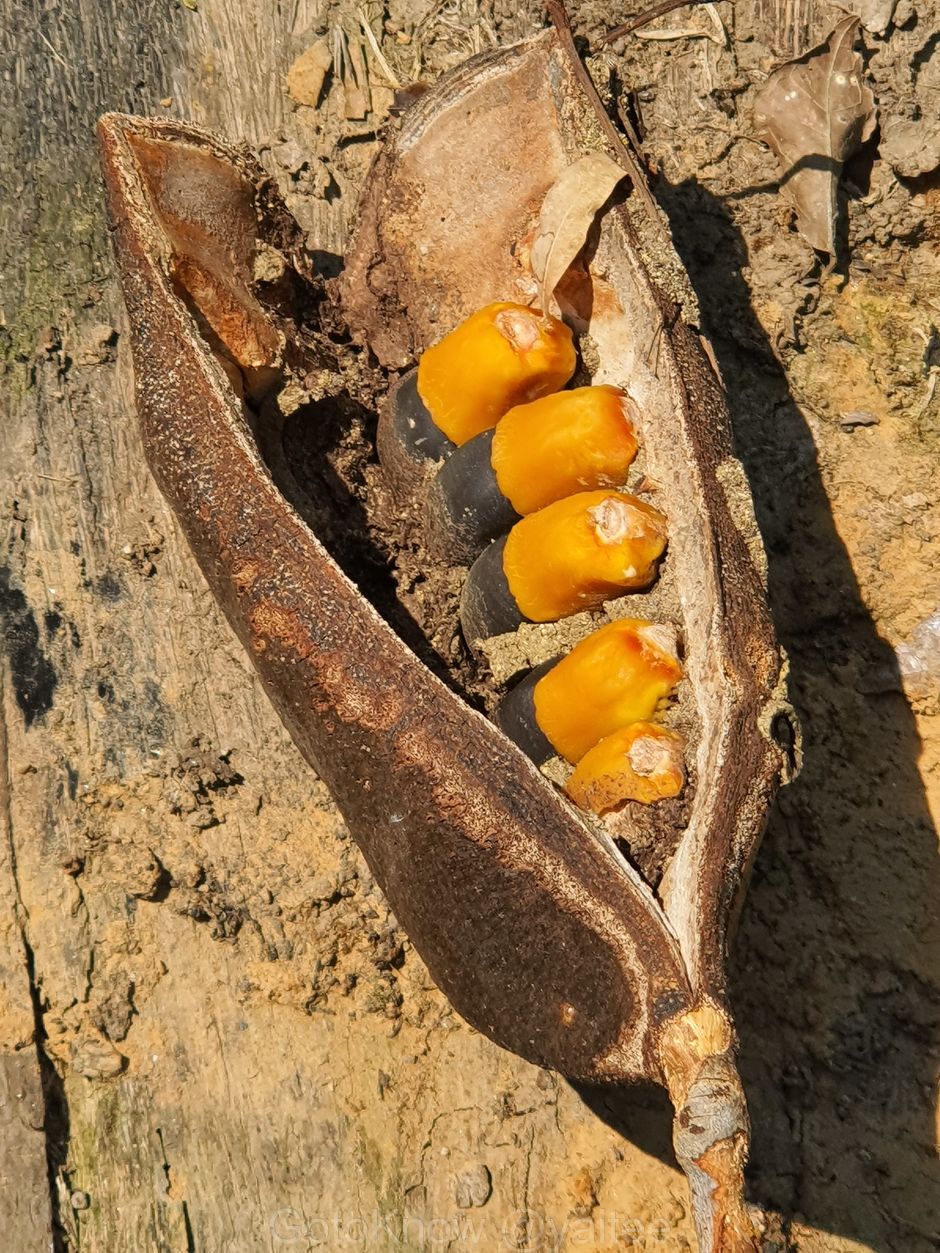
I had Tasted some มะค่าโมง (มะค่า) seeds in my younger days. I cannot remember what it tastes now …but I think they were oily, nutty, with no strong taste or peculiar texture – just a nut. Need to spit out the seed cases though ;-)
I had been told that มะกล่ำตาหนู are not ‘all bad’. The seeds can kill. The rest of the plant can cure or be eaten (as food).
I had also been told that the seeds can be roasted and ground into powder and mixed with some vegetable oil (most likely turpentine or linseed oil) to make ‘anti-mould’ (anti-batcterial/anti-fungal) varnish or paint. So the seeds are useful for those who can see a little further.



Thank you for the pics.
I had Tasted some มะค่าโมง (มะค่า) seeds in my younger days. I cannot remember what it tastes now …but I think they were oily, nutty, with no strong taste or peculiar texture – just a nut. Need to spit out the seed cases though ;-)
สวัสดีค่ะ..คุณsr..คิดถึงเมื่อสมัยเด็กๆเล่นเม็ดมะกล่ำตาหนู..แล้วเอามาเคี้ยวเล่นขบเท่าใดมันก็ไม่แตก..พอตอนโต ไปอ่านพบว่าเจ้าเม็ดนี้ เพียง250มิลิกรัม..สามารถล้มม้าได้ ตัวนึงเลย..พอรู้ว่ามันเป็นพิษ ธรรมชาติ ก็สร้าง สิ่งป้องกันพิษเอาไว้ ……ไปเห็นที่อินโดนีเซีย แถวสุมาตรา..เขาเอาเมล็ดนี้บดใช้เป็นกาวติดลวดลายเครื่องเงิน ที่เขาถักเป็นเครื่องประดับ..ด้วยค่ะ… (บนกลางดินแกลลอลี่ชีวิต … วันนี้)..
I had been told that มะกล่ำตาหนู are not ‘all bad’. The seeds can kill. The rest of the plant can cure or be eaten (as food).
I had also been told that the seeds can be roasted and ground into powder and mixed with some vegetable oil (most likely turpentine or linseed oil) to make ‘anti-mould’ (anti-batcterial/anti-fungal) varnish or paint. So the seeds are useful for those who can see a little further.