
Leadership Challenges for ASEAN
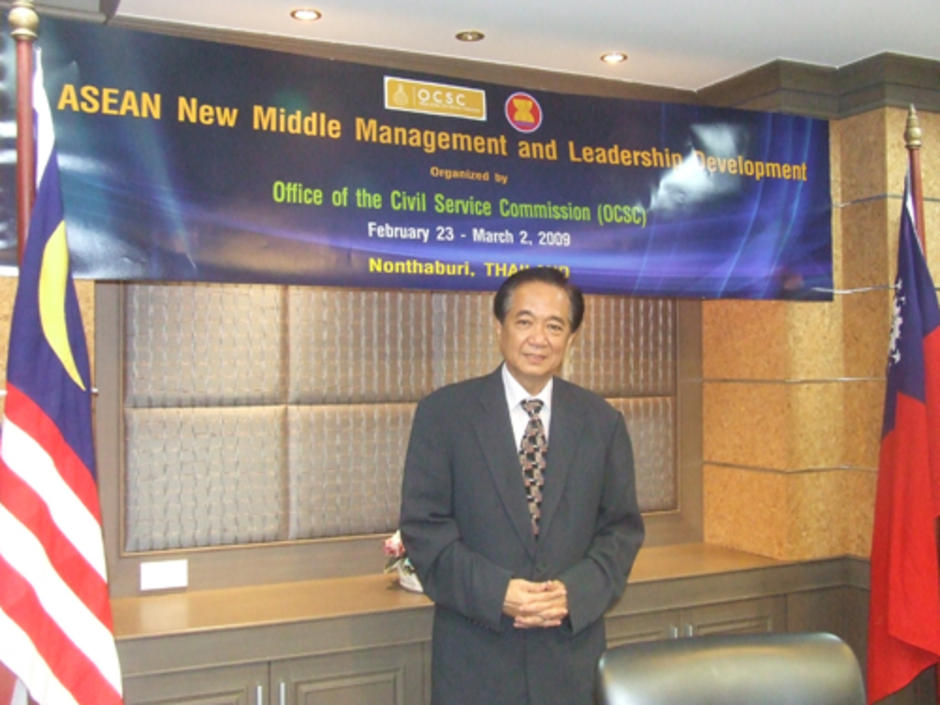
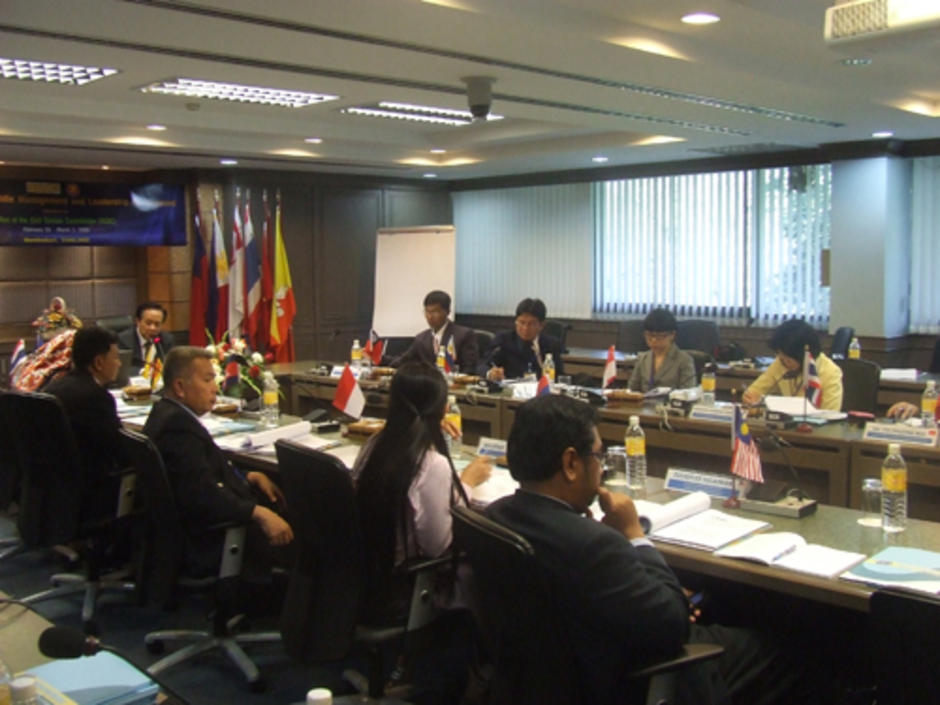
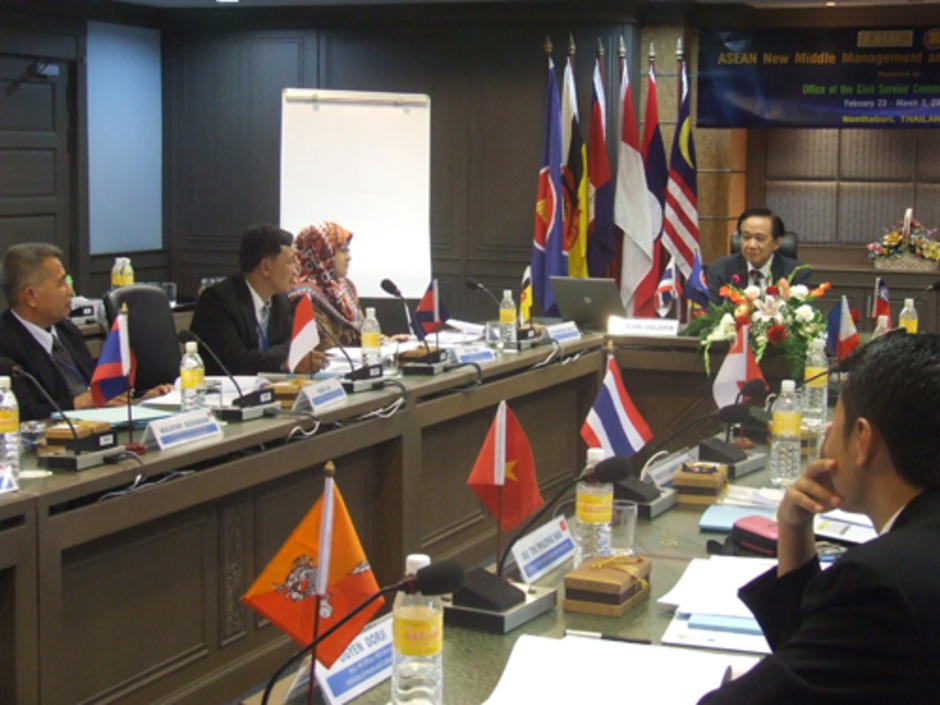
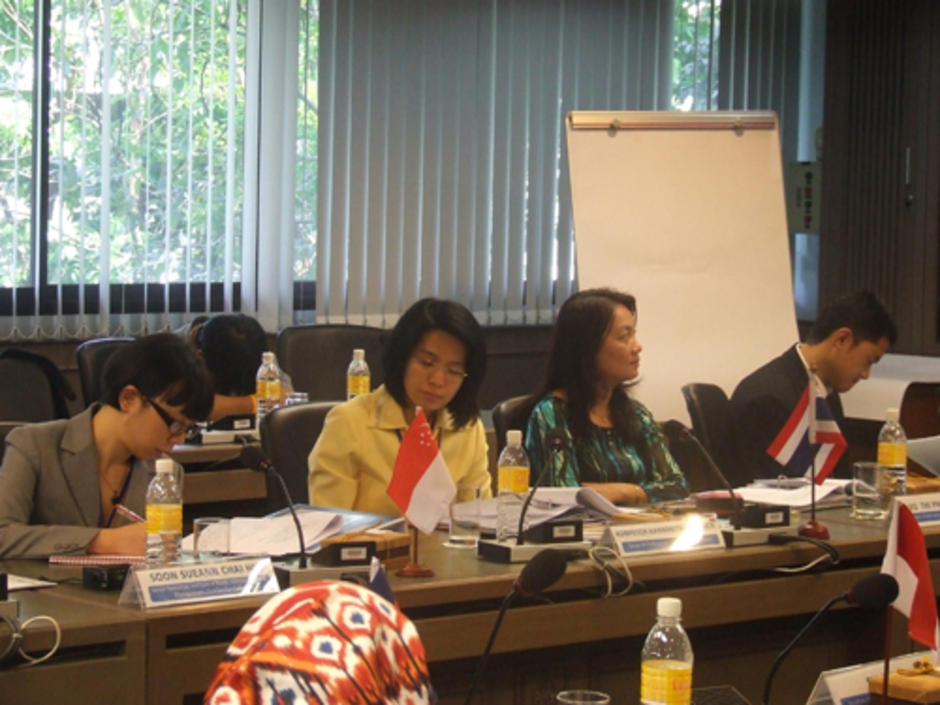
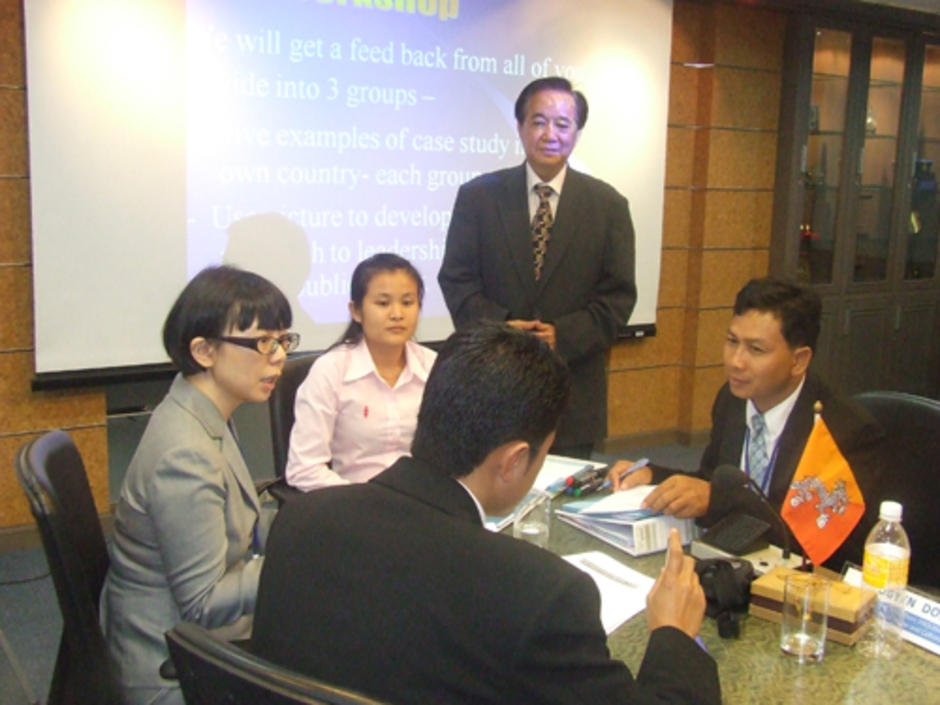
On the 23rd of February, I was invited to share my ideas with 10 ASEAN middle level public sector leaders and one from Bhutan, the theme is important because it is the begining of the work of 14th ASEAN Summit in Thailand.
-Therefore, leadership development is crucial. My views on leadership challenges are
-to develop ASEAN leadership style for the future
-to deal with financial crisis
-to deal with individual country ASEAN's leadership approach
-to enhance ASEAN Role in the global stage
-to get things done during my workshop


Lesson learned today is that of unity in diversity. I will remember that although we want to reach a common goal, we have to take into account that we are different and that will be different approaches to achieve this common goal.
Dear Dr. Chira Hongladarom,
I would like to thank you for your presentation today. I learned more experiences such as the role model on leadership development and what are differences between leader and manager.
Thank you,
Malathip Keohanam from Laos
The thing I’ve learned today was a unity and diversity. If we from ASEAN countries are going to develop region, we must have unity and diversity. We must use all the sources we have and try to share among us.
I realize that the most important to do as a leader is how we develop other people and benefit other people.
As one member of ASEAN Leadership training course, I learned a lot from lecture and workshop especially ASEAN leadership approaches-we must be united in diversity to get success to economic development.
The one thing that I have learned from Dr. Chira Hongladarom is that there is a possibility for ASEAN countries to work together, in spite of diversities in member countries (culture, religion, nature of government), to develop ASEAN leaders in public sector to attain good governance in our respective countries to overcome challenges ahead of us (as an organization) to attain cooperation economic sustainability.
Thank you very much for making us aware of our important role as public sector leaders.
Dear Dr. Chira,
I would like to thank you for spending your time, ideas, experience to me and all of us from ASEAN countries members. Once again I would like OCSC take me in this program.
Thank you very much
Pech Chin
Dear Dr. Chira Hongladarom,
I would like to express my most sincere thanks to you for taking the time from your busy schedule to share you knowledge and experience with us today. You asked us to share one key thing I have learnt today but that is different because I have gained much from our afternoon with you. However, I will try my best.
The number one new knowledge I learnt today is you “paradox” of leadership in ASEAN. ASEAN is diverse and each has a style of leadership that fits very well with our own culture and way of life. This diversity stuck me as I sat in the classroom with participants from all of ASEAN+Bhutan. However, I will remember that diversity doesn’t only represent differences. Diversity also represents opportunities for collaboration and innovation. Because ASEAN+Bhutan are unique, we must cherish the opportunities we have for learning from each other to create something that is useful and valuable for ASEAN+Bhutan.
I will take this lesson back to Singapore and to try to apply it to my work in the public service and in the future.
It was a great privilege to have been your student.
Thank you
Soon Chai Hui Sueann
Singapore
23 February 2009
What Have I learnt today?
I have learnt that “we all are diverse and change is inevitable”.
As a guest member of ASEAN, it was a great honor to learn that ‘though how diverse we may be if we have the ethical qualities (leadership skill)’ and if we share the same vision, then, we can succeed in achieving our aspiration in our own different way.
Prof. Dr. Chira Hongladarom,
Sir,
What I have mentioned above is what I have gained and it very much reminds me of the phrase “Managers do tings right, leader do right things!”
Faithfully yours,
Ugyen Dorji
HR Officer from Bhutan
§ It is hard to answer.
§ From Vietnam's case study, leadership development should focusing on overcoming economic crisis. We have a lot of projects involving public, private and NGOs sector. We urgently encourage all managers to pay attention to Vietnamese customers and focus less on export.
§ From Bhutan's case study, we would like to talk about the father of the current King. He is visionary and futuristic. He talks about Gross National Happiness which nobody has captured before.
§ The current Prime Minister is also visionary. He develops value, natural resources protection and good governance.
§ It is like my 8K's Happiness Capital. The West can learn from our Happiness Capital which comes from lifelong learning.
§ ASEAN should learn how to help the world.
From Philippines' case study, the role model is the Chairman of Manila Metropolitan. He is visionary. He leads and implements. He introduces a lot of changes to Manila and improves the metro's welfare.
Workshop 2 ASEAN approach for leadership development
From the picture, 11 people means 11 countries (10 ASEAN countries+Bhutan). We will go to fantasy island which is our destiny but have to face challenges like global warming etc. Good leaders must have qualities like honesty, mission etc.
Excellent
From the picture, the tree represents the method of leadership development which has these components.
1. Roots are the parts of leadership development that can help us such as technology, resources, human capital, infrastructure and money. They should be strong to support the trees.
2. Trunk is leadership quality like honesty, good vision etc.
3. Branches are different approaches to develop each country's leadership style.
4. Leaves are the result of leadership development.
We accept our differences but have unique strengths and can contribute.