
My objectives today are to share and learn with all of you and to enhance each capacity of all of you to become more capable.
Dear students,
This is my first day to meet all of you. I taught here during 26-28 years ago. Now I come back again and I feel happy to be here with all of you. My objectives today are
§ To share and learn with all of you
§ To enhance each capacity of all of you to become more capable.
This blog is the best way to share ideas and I’m looking forward to read the interesting views on HRM.
Prof.Dr. Chira Hongladarom
...........................................................................................
This is our learning environment in the class.
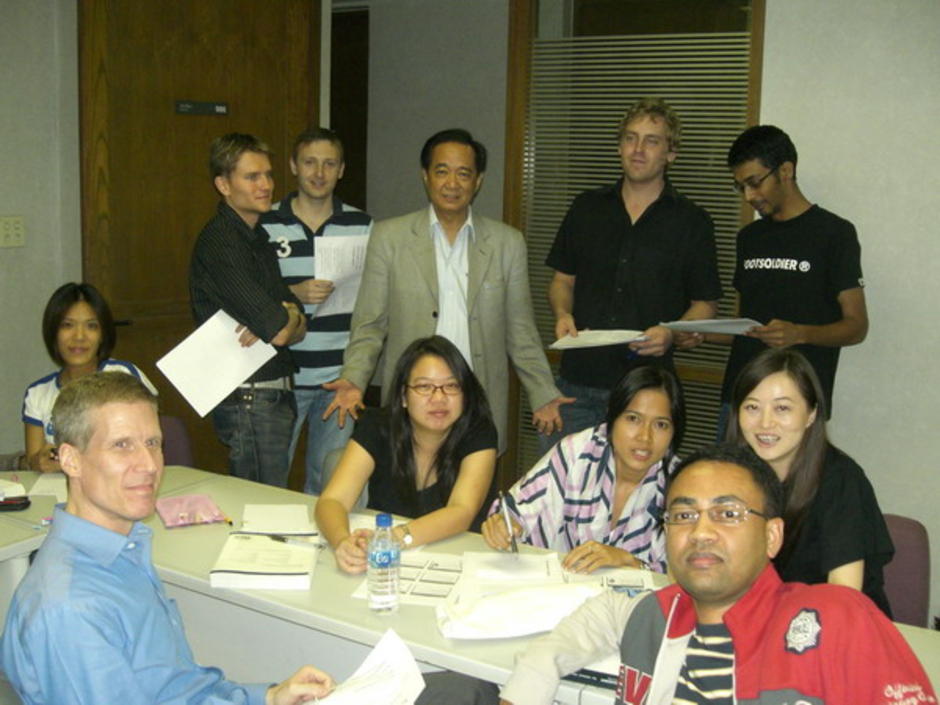

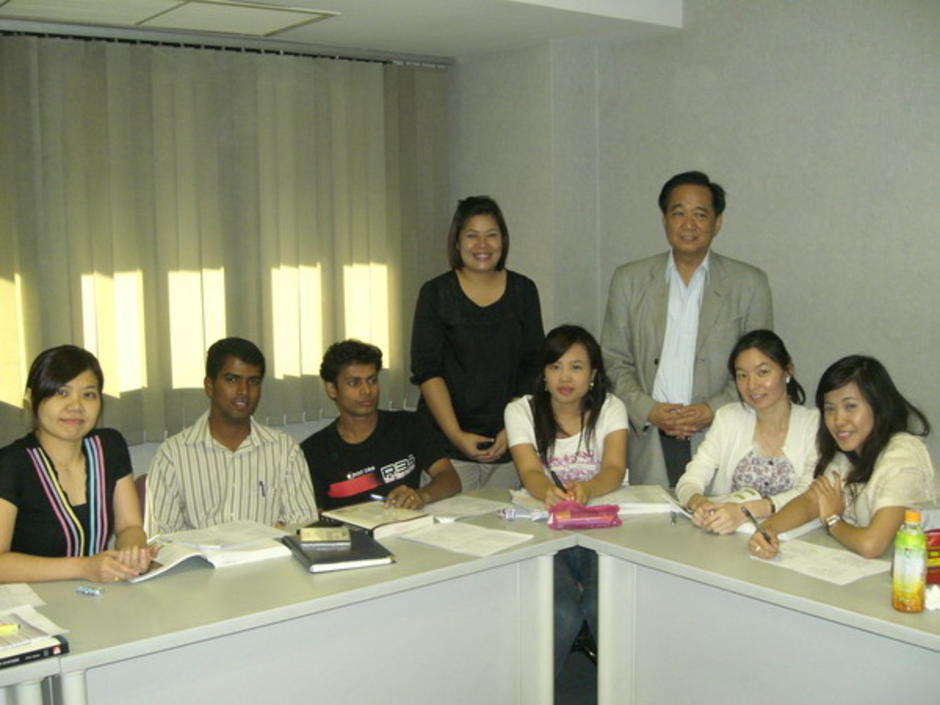
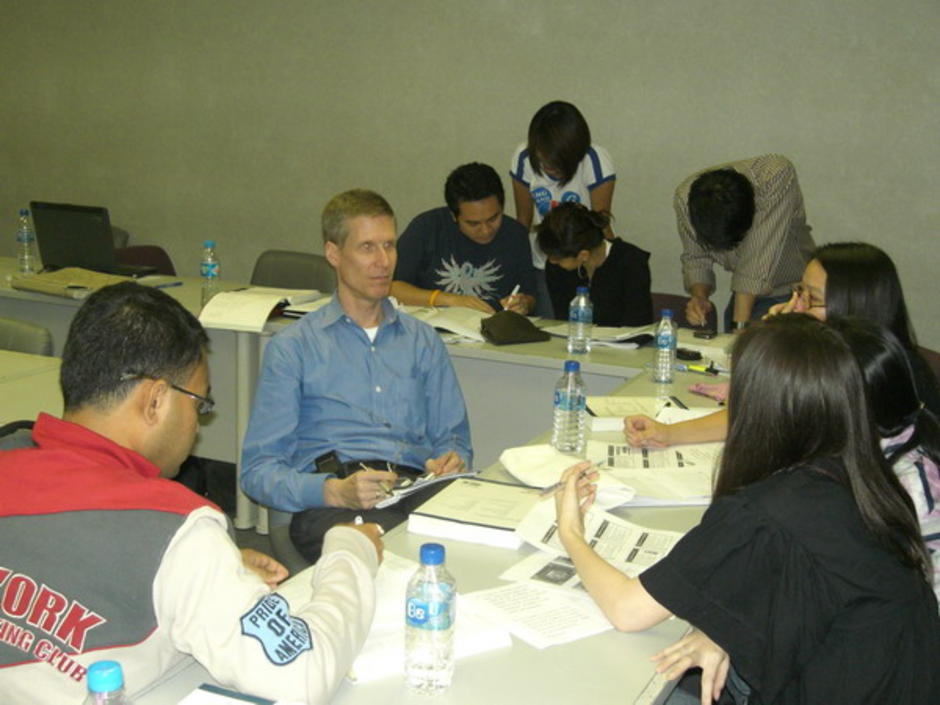


นิสิต สถาบันวิจัยศิลปะและวัฒนธรรมอีสาน มมส. ยังคิดถึงอาจารย์ค่ะ
รักษาสุขภาพนะคะ
Question:
Analyze page 5 (from the book), and tell me what's wrong with it.
Answer:
During the analysis of the "Strategic HRM practices" written by writers: 'Noe, Hollenbeck, Gerhart and Wright' - leading to company performance there were some items found to be missing in regards to HRM.
1)The most important item missing are the Mission and the Vision of the company.
Mission - represents the company's short term goals and objectives.
Vision - represents the company's long term goals and objectives. Like for example where the company wants to go and what it wants to be in the next 10 years.
Mission of a company always changes, and is suspectible to modifications. But the vision of a company remains the same.
2) The Company needs to know if the employees are willing and most importantly happy to work.
For example if an employee is selected for a hazardous job (say for example with high salary) like work in Nulcear power plant project for or a Space agency.
Because money is not important factor all the time.
The most important thing to know is if he or she is happy & willing to take the risk of their lives - thinking that if it turns out to be successfull, he or she will be a super star or an icon to be stamped in the pages of the history book.
This all comes down probably to motivation.
3) The HR also needs to find out if these employees are suitable and willing to perform "Multiple-role-jobs".
So in times of crisis the company can go ahead forward.
4)Is the HR ready to implement changes & understand the mid set of employees, (MAKE EMPLOYEES EXCITING) in the work place environment and modifications of job responsibilities for employees. This is because most employees are resistant to change.
5)Adequate no of HR personels needed to help all employees in a corporation.
Question 1: Tell me what's wrong with page 5 from the text by Noe, Hollenback, Gerthart, Wright: Human Resource Management: Gaining a Competitive Advantage. Sixth Edition
Analysis of figure 1.1 which illustrates HRM practices separated into eight strategic HRM functions all leading to company performance.
Answer: 1) The problem with their sequence diagram is that it is limiting to say the least. Immediately you notice that it does not mention the company's mission nor vision. However, to the authors, this may be counter-intuitive. Of course human resource needs and practices must be aligned with the company's goals, objectives, mission and vision. On-the-other-hand, I do believe they would have a stronger case if they explicitly mention this and not leave this important aspect to be implicit.
2) As well we are left to assume that employee motivation and employee happiness is perhaps part of one of the functions. Maybe recruitment or selection, or perhaps compensation or employee relations. We just do not know. Again with such crucial hot topics as motivating employees and employee happiness, they should have explicitly included these topics, instead of leaving us guessing.
3) Finally, they imply that all these functions lead to company performance. However all these functions could simply lead to employee satisfaction and not overall company performance. As well by including company performance now, it was evermore important to include the aligning of company goals, objectives, mission and vision at the beginning of the strategic HRM function.
To back-up their thoughts, this figure does provide a basic framework of the HRM functions sufficient for those being introduced to the topic for the first time.
However, if I were to design this diagram it would be more like the following:
Strategic HRM Functions > Company Goals, Objectives, Mission & Vision > Analysis & design of work, Division of Labour & Work Processes > HR needs & forecasting > Recruitment Strategies > Selection Process > Motivation, Life-long Learning, Training & Development > Compensation, Benefits, Work-life Balance > Continuous feed-back & performance evaluations > Employee relations & Employee well-being > Employee satisfaction & cost-savings > Higher Profits > Achievement of company goals & objectives > Overall company performance.
Question1:
Regarding to Strategic HRM shown in page 5 (Analysis and design of work, HR planning, Recruiting, Selection, Training and development, Compensation, Performance management, Employee relation) considered to influence and maximize on company performance is not well complete to lead to highest company performance. These HRM practices are insufficient due to lack of vision, mission, goal-setting, motivation, satisfaction as well as retention their workforce.
1)Goals-setting must follow direction of mission and vision to know what needs to be done that help to understand how to enhance the right activities and decrease the amount of energy wasted on unimportant goals. Besides, goals should be clear, specific, and difficult enough to promote greater effort since if it too hard to reach; it will meet with less participation and commitment. As well, make sure that the explanations are clearly understood. Goals cannot interest without incentives and feedback so that goal accomplishment takes on meaning and progress can be monitored.
2) Motivation is an energy that a person is willing to devote to a task. Company should create motivation through “rewards” linked to accomplishment and pay for performance. Pay for performance program can be divided into three levels for individual worker, different teams, and entire of organization. However, organization must be aware to create competition among co-workers and destroy team morale. Highly motivated people might lose motivation for three reasons. First, high expectancy; cannot perform as anticipated. Second, perform well; not lead to desirable outcome. Third, experience with the rewards; discover disappointed from initial need.
3. Satisfaction is a pleasurable feeling that make workers stay and loyal to company. Better treating employees as valuable assets lead to higher employee satisfaction. In addition, knowing what their employee’s need, desire, expectancy, and their ability is vital. Because people who value high in their needs for achievement, they are no longer being driven by the money, but instead are driven by more intrinsic rewards. Thus, company has to find other alternatives than pay to motivate workers, for example, tries to make employees happier with health care, on-site gym, amenities such as recreation facilities in break room or relax room. Create a more pleasant atmosphere for people at workplace, more relaxed culture, using flatter the organization for better collaboration.
4. Pay attention not only to attracting,but also retaining the skilled and talented workforce. For example, provide a positive attention to workers such as personal attention in a letter from CEO, or small symbolic mementos for their good work. Utilize decentralization and empowerment employees to increase employee engagement. Understand and enhance employees’ attitudes and emotions that they experience in the workplace. Design an employee survey research to build around and monitor employee satisfaction.
Finally,only HR department alone cannot maximize overall company performance, but also with cooperation of many departments such as IT, operation, financing and marketing.
Question 1:
After reading page 5 Strategic HRM which consists of Analysis and Design of work, HR planning, Recruiting, Selection, Training and Development, Compensation, Performance Management, Employee relation. I found that not only vision and mission missing from the strategy but Goal, Evaluation, and Environment and Communication also.
As Arisa mentioned about Goal, I would like to add that company’s goal will help employee to go in the same direction. In each unit can have its goal but it must conform to company’s goal.
Only performance management is not enough because companies can manage quantity but cannot manage quality by without evaluation. Performance Evaluation can help employees to know quality of their work. Company should evaluate employees’ performances and should have employees to evaluate themselves too. For example, DTAC put the mirror at call center desk for controlling staff emotion.
Environment is quite important since employees stay at workplace at least 8 hours a day. If atmosphere is pleasant, employee might enjoy working and might have good mood. Many companies try to create good environment because environment impacts employees’ health directly.
Communication is the best way to connect people. Human Resource Management will not effective if employees and leaders cannot connect each other.
Answered question no1. Analyze page 5 and tell what’s wrong with it ?
HRM practices in the text book refer to the policies, practices, and systems that influence employee’s behavior attitudes and performance. Many companies refer to HRM as involving people practices. As the figure in the text book shows HRM practices include analyzing and designing work, HR planning, recruiting, selection, training and development, compensation, performance management and employee relations. My comment on HRM practices is that HRM department and/or managers need to understand what is the objective of the company then design HRM practices meet to theobjective. Employee feedback is very important therefore the evaluation of HRM practices program should be add into the diagram in order to see the effectiveness of the program and it would be useful for the next development.
Question : Analyze page 5 and tell me what’s wrong with Human Resource Management Practices ?
Comment : The mission and objective of Company is very necessary because it is the key to determine HRM strategy however the business mission and objective is not only set by Human Resource function but also Finance, Sales and Marketing and other functions which involved to develop and deliver plan to improve the performance and achieve the goal of company together so definitely,HRM is the most important supporting for all areas to push and make employee to understand for management expectation and to motivate and develop them to work happily with high efficiency in the roles of their department so ;
The practices of HRM can not develop with isolation but should determine the strategy to relate with the objective ,KPI ,Culture,Work process ,the way of communication of each departments which have different condition in order to build the best team and also have high productivity.HRM should start from analysis and clear for design of work (job description) and try to plan ,recruit and select people to link with criteria of that department after that to approach them with training and developing to improve skill and thought process with positvie to work in their job.Ensure for compensation that is suitable for performance and don't forget to create activities to make employee relation ,relaxing and satisfaction to be this company with happiness and also create the loyalty in thier mind to stay here in long term.
Strategic HRM which are right people ,right time and right place that will support company to achieve the objective in business.
Question 1: Tell me what's wrong with page 5 from the text book. Analysis of figure 1.1
Answer: There is not thing wrong with this figure; it is good enough for some kind of businesses such as the businesses or factories which have to produce only on seasonal period or hire people only when they need to produce the products which based on the seasonal factor and paid on hourly basis (less skill labors; whenever the season end they will layoff their staff or close the factory, so, they don’t need to set a strategy for employee retention, but for some businesses such as service organizations that need skill labors and continuous working period. They need more functions to increase the company performance such as "motivation" and "retention" programs to increase company productivity and decrease company turnover cost. For example, TISCO securities, the company that I work for has set a program to help keeping their staff as long as possible by providing a gold necklace for staff who works with them longer than 1 year. (The gold value will increase for each additional years of working). They also provide company mortgage for housing, and other family benefits which can help increasing employee retention. For the motivation program, they has created a program call “cross selling”; any staff who can sell any company products will receive a point to increase he/she KPI scores. This program is very successful. It help TISCO Securities to increase their sales revenue approximately 30% per (they can reduce number of sales staff- reduce cost of hiring sales people) and use all existing employees to generate more revenue to increase the company performance. So, from this example, we should add “motivation” and “retention” functions to the diagram and it would be like following;
Analysis and design of work > HR planning > Recruiting > Selection > Training and development > Motivation > Compensation > Performance management > Employ relation > Retention > Company Performance.
Q1). Analyze HRM practices on page5 and tell me what’s wrong with it.
It cannot be said that the HRM practices shown in the book are totally wrong. However, it lacks the basis or the previous process. Before the HRM practices can be performed; a company needs to determine its strategy based on its mission, goals, opportunities, threats, strengths, weaknesses, and its HR capacity information provided by HRM function.
That means 2 things. First, HRM function needs to involve in the company’s strategy generation and selection process since the beginning. Second, once the company’s strategy is determined, HRM practices can then be performed to achieve the company’s mission and goals. For example, HRM function will know what types of employees should be recruited and selected and what training needs to be provided to gain some particular knowledge and skills.
Q2). Analyze sustainability challenge on page13 and compare to my sustainability capital.
Sustainability in the book refers to the ability of a company to survive and succeed in a dynamic competitive environment. It is one of the competitive challenges that companies recently face. HRM practices become important for helping companies deal with the sustainability challenge including economic changes, the makeup of the labor force, and meeting stakeholder needs (ethical practices, high-quality products and services, return to shareholders, and social responsibility).
While HRM practices play an important role for company sustainability as mentioned in the book; sustainability capital from the 8 K’s Theory of Dr.Chira is one of the concept for basic HR development. In other words, conversely, Dr.Chira’s sustainability capital plays an important role for HR development. That is because, to develop HR, people need to keep learning continuously as there is always new knowledge emerging.
Question 2:
Sustainability challenge refers to the ability of a company to survive and success in meeting the needs of its stakeholders (e.g., employees, customers, suppliers, shareholders, community). For example, emphasize increase value on intangible assets and human capital, provide high-quality products, services and experiences for employees and customers, provide a return to shareholders, including the ability to deal with economic and social changes as well as engage in responsible and ethical business practices.
The role of social responsibility and ethics has become even more important as many firms have seen their image and reputation are necessary for success, along with ethics can build trust, commitment, and build long term relationship with all stakeholders. Strong ethics causes employee to be motivated to serve customers, committed to the firm, committed to high quality standard, and satisfied with their job. With winning the trust and respect of their employees, customers, and society allow a firm to earn higher profit in the long run.
Refer to Prof. Dr. Chira’s 8K theory that sustainability capital involves continuity in developing people and lifelong learning as essence since new knowledge always occurs and only primitive knowledge is not enough to cope with changing. Also, everlasting learning the new knowledge becomes more valuable because it generates the quality and potential human resource. As demand for employee will exceed supply, especially the talented workforce, thus a company should continuously encourage employees for learning new things, sharing knowledge including offering more opportunity to develop their skills. In addition, employees look to the leader as a model of acceptable behavior, thus strong leadership and corporate culture in support can be the key role in guiding employee behavior.
Answered question no2.Analyze sustainability challenge and compare to professor sustainability capital.
The Sustainability Challenge in the text book refers to the ability of a company to survive and succeed in a dynamic competitive environment. Sustainability includes provide a return to shareholders, provide high-quality products, service and work experience for employees, increased value placed on intangible assets and human capital ,social responsibility ,adapt to changing characteristics and expectations of the labor force ,engage in responsible and ethical business practices and effectively use new work arrangements. In other words the sustainability challenge are related to the economy the characteristics and expectations of the labor forces, how and where work is done, the value placed on intangible assets and human capital, and meeting stakeholder needs.
Sustainability capital from the 8 K’s Theory of Dr.Chira is one practices for HRM .The practice refer to people need to keep learning continuously .It is very important for people development because new knowledge is develop all the times. Therefore people need to sustain their learning in order to make themselves competitive to others.
Both practices play a very important role for HRM practice. With all the challenges, HR function need to design the practice that suitable for employee in order to strengthen and enhance their capability to deliver highest productivity to the company for the long run.
Q1).Analyze page 5 (from the book), and tell me what's wrong with it.
-From my reading and analyzing from Strategic HRM chart in page5, I don't think it's totally wrong but this flow chart is one part of HR strategic Planning and this flow chart is quite too old version.
-Another key points;there are some elements in this chart is putting in wrong position. Moreover, there are some missing element in Strategic HR Management; one point is already discussed in class is HR strategic planning should be align with Vision and Mission of the company.Some element or HR function should be doing in paralell, it can't do step by step as the flow chart represented.
-I were re-design the Strategic HRM Planning as details below from my understanding. There are 5 key functions under strategic HRM Planing Process
1. Recruitment
-Manpower planing>Selection>Hiring
2. Training & Devekopment
-Traing>Developing
3. Compensation
-Reward & Recognition
4. Performance Management
- Evaluation> result> back to training & development process
5. Employee Relation
- Community & Labour union
In some company will have another function to do organization development that will support total company performance & reinforce company value.
Q2)Analyze sustainability challenge on page13 and compare to my sustainability capital.
It's not the same focus, sustainability challenge on page13 focus on company stakeholders which are included customer,employee,supplier and other parties that expect to see the company succeed, however in Dr.Chira sustainability concept is focus on how to sustian the human resources in the company. Therefore, both of these 2 concept,it reflect to company performance.
Question 1: Analyze page 5 and tell me what’s wrong with it.
The HRM practices shown in the text book are still not complete. The first obvious things disappeared from the figure are company’s vision, mission, and objectives. Without them, HRM cannot help the company succeed. Before HRM practices can be started, HRM function has to understand the company’s business and objectives. Also, each step in HRM practices (analysis and design of work, HR planning, recruiting, selection, training and development, compensation, performance management and employee relations) has to align with the company’s strategic plan to meet the company’s objectives. Finally, if there is any people issues occurred, HRM function has to feed back those issues to the top management. This could result in the revised company’s strategic plan to deal with the faced issues. The HRM practices will become more and more effective because of this continuous cycle.
Question 2: Analyze sustainability challenge and compare to my sustainability capital.
These 2 sustainabilities refer to different things. The sustainability challenge in the text book refers to the ability of a company to survive and succeed in a dynamic competitive environment such as meeting needs from stakeholders and changes in economy.
Sustainability capital, one of the 8 K’s Theory of Dr.Chira, refers to the capital that people need to be developed. It means that people have to learn all the time as new knowledge is always occurred.
Question 2.
In the textbook, sustainability refers to the ability of company to deal with all factors that impact directly or indirectly on company and also refers to ability of company to deal with its stakeholders in order to create sustainability success.
When compare with Sustainability capital which is one of 8 K’s theory, they have the same objective. Both focus on long term success. Moreover, sustainability capital of Dr. Chira emphasizes on human resources. I think human resources is important to company because human is the main factor that lead company to both long term success and loss.
Q2). Analyze sustainability challenge on page13 from the text book and compare to Dr. Chira's sustainability capital.
This is what I understood in short term.
The text book clearly puts more stress on survival of the companies through tough competition. It somehow tells us about how to tackle labour problems, maintain proper business ethics, and also keep employees and shareholders happy.
But as per Dr. Chira's Sustainability Capital,(things are changing) the 8K's mentioned by him are very much related to HRM. As per his sustainability capital learning and knowledge never stops.
So Dr. Chira developed another new 5K's - as the concept for human resources development in globalization.
Question 2:Compare pg 13 Sustainability Challenge with Dr. Chira's Sustainability Capital.
Immediately after reading page thirteen in our text on Sustainability Challenge we know they are not talking about the same things. The book takes a broad view of sustainability which refers to the ability of a company to be successful in today's market place. This success is based on how well the company meets the needs of its stakeholders. These stakeholders being the shareholders, the community the organization is part of, customers, employees and all the other people that have an interest in having the company succeed like governments, trade-unions, and such.
The next part is closer to Dr. Chira's Sustainability Capital and I will explain how. The book talks about the ability for companies to handle and deal with change, how they need to be responsible and ethical in their business practices providing high-quality goods and services and have processes in place to ensure that stakeholders needs are met. All this has lead to the growth we see in professional and service occupations. The skill set for jobs is rapidly changing and knowledge is becoming more valuable. We have seen changes in traditional employment patterns and new jobs created. Also with aging populations and slow population growth and the lack of employees with the right skills, the need for qualified workers will outstrip demand and thus we have the term "war for talent".
Now by looking at Dr. Chira's Sustainability Capital of life-long learning and always having the need to acquire new knowledge. We can see by following this idea that as individuals we need to prepare ourselves to be the qualified employees sought in the future as mentioned above. By practicing learning in the short-run that leads to long-term success, then we are doing something right. We will add value to our companies and our companies can facilitate this by having commitment in its people.
For example today in the news there was a story of Indonesian nurse's on their way to Japan to take care of Japan's elderly. The Japanese government saw the need to bring in workers due to a lack of local supply and the nurses saw that learning a new language would expand their opportunities. Change is afoot and people and industries are working together to solve these challenges.
In conclusion the two ideas are related in that they need each other as active players to be a success as companies and individuals together as one. The world is rapidly changing and it is those that learn how to deal with these changes and work them to their advantage are the ones who will succeed. The companies that promote this life-long learning will attract those who see this as the way forward and will be themselves a success. In essence, one feeds the other and it is a cyclical relationship, one always feeding into the other. Success breeding success.
Question 2 : Analyze sustainability challenge in textbook and compare to my sustainability capital?
Comment : The sustainability is the ability of a company to survive in a dynamic competitive environment and to meet the needs of stakeholders are various interest group who have relationship with,and consequently whose interests are tied to the organization as employees, suppliers, customers, shareholders and community which based on an approach to organizational decision making that considers the long-term impact of strategies on them and to deal with economic and social changes ,engage in responsible and ethical business practices,provide high-quality products and services and how to put in place methods to determine them.
The challenge of this sustainability is how company to survive with succeed and to meet the objective and needs of stakeholders by dealing with changed situation in long term and in order to cover need of stakeholders who have variable expectation so the implement of company will have to compromise generally but do not focus on employee improvement because there are many criteria and limitations to balance them so which may not satisfy and practice completely for HRM strategy.
Compare to term of sustainability capital in 8k’s : concept for basic human resource development in Prof. Dr. Chira’s theory is different view because he separate other factors which effect to company succeed to other K ; such as Ethic capital , Social capital , Digital capital ,etc to concentrate and make sure for strategy development is suitable and efficient for each of K; Sustainability capital will focus and realize in employee view that how to practice , coach and develop them to strongly improve and survive with succeed base on changing situation for long term.
So what is wrong with page five, that depends on what you’re looking for? Figure 1.1 highlights the order of human resource management practices which need to be in place to help increase the performance of a company. The figure highlights 8 strategic HRM practices under broad and a little ambiguous headings. By using such headings the authors of the text are trying to move away from limiting themselves too much. For example where does the issue of employee motivation fall? Is it under compensation, training and development, performance management, employee relations or within the actual design of work itself? In my opinion it needs to be considered in all the mentioned practices, it cannot to confined or limited to one specific practice.
HRM is a fluid concept and thereby when you try to capture this fluid concept within a static medium such as figure 1.1 you are going to be facing limitations. I believe the authors of the text were trying to capture the broad idea of human resource management practices in a manner which would not be overpowering and easy to understand for individuals from various different academic disciplines. In doing so the authors skimped on a few areas in terms of detail and explicitly as has already been highlighted by my colleagues in the preceding entries. Once thing I do believe that the diagram need to make explicitly clear is that all of these practices need not only be put in place but also implemented and managed (not always that case here in Asia) in order for there to be a positive impact on the performance of the company. Only a well managed HRM program will be able to bring about “gradual” improvement within company performance over a period of time.
So coming back to your question “what is wrong with page 5”, well nothing much really, it accomplishes what it set out to achieve. It gives you a basic picture into HRM but is lacking in detail. I am assuming that as we progress onwards from page 5 through the remaining 750+ pages of the text that the issue regarding the lack of detail will gradually disappear.
Question1: Analyze page 5 and tell me what’s wrong with Human Resource Management Practices?
Answer: I agree about Goal & Objectives but I would not mention about it again (as many people already answered it). For my opinion, in the step of diagram in the book, the Employee Relations (creating a positive work environment) should not put in the last step. After the Selection process, we should start program Employee Relations go along with another process, and should attend with employee’s feeling and attitude about company and their job.
Why? Because, many companies fail in to keep their employees to stay in the long term, moreover that we also lose money in process of Training & Development which if after this process, some employees go out to find another place, it waste of time & money for our company. Moreover, if theirs have negative feeling and attitude to our company, it can be show out in their performance and the quality of their jobs (which will be negative impacts in long term).
For HRM, should have knowledge about Innovation, because the world changes everyday like also people. So, we should adjust and change the way to manage our employees and for company’s performance.
Question 2: Analyze sustainability challenge and compare to professor sustainability capital.
Answer: Sustainability in book refers to ‘the ability of a company to survive in a dynamic competitive environment’ (which based on how company meets the needs of its stakeholders). For “Sustainability” in term of Dr.Chira, which do in short term well will lead to sustainable in long term, in my opinion, I think HR department in organizations play very important role today, because nowadays skill or talent of employees play as a major advantages for competitive in business. So, talent’s of workforces is very important and HR department would control and find the way to keep and also develop their workforces in long term.
Which mean, in book look in big view in stakeholders (employees, shareholder, suppliers and community). For me viewpoint is we should start from inside, which mean try to conserve our workforce and also develop them and concentrate in making relation for positive attitude (which will show in performance and quality of products or services), try to develop them and always try to innovate the new thing to appropriate with our company and our workforce in long term. If today we do well, it will lead well in another day and will become sustainable.
Question 1. Analyze page 5 and tell me what’s wrong with Human Resource Management Practices?
First of all, my knowledge and background about the Human Resource Management are just about a few because my work field is a kind of marketing related, however; I realized how much HRM is so important. Since “People” is the most significant resources for every organization, they therefore should be focused.
For what’s wrong of HRM Practices which was explained in the last Saturday class that the result should not be concerned about the company performance. In my opinion, all strategic HRM in page 5 can be indirectly led to the success of the company. It is because if any stage does not work properly, it means that there can influence to company performance more or less. In addition, I agree with training and development such as IT or new technology or software because this will help the employees to improve capability which will result to increase company performance also.
Question 2. Analyze sustainability challenge and compare to professor’s sustainability capital theory
In text book, sustainability is referred to an aspect of corporate social responsibility which related to the impact of the organization on environment, also included the ability of that organization to run on and succeed in the dynamic competitive environment. That is mostly concerned about the environment and whether the firm can survive and succeed, which are different from the professor’s sustainability capital theory that indicates something done in a short term successful; consequently, continuing maintain or sustain to the future in long period.
Moreover, the text book mentions about the changing of skill demands for jobs, resulting from economic and e-business, that means nowadays become focusing on knowledge more than before. With this point of view, I agree that people, who have more knowledge, especially on IT or innovation, will be concerned more and more.
Lastly, sustainability in the text book also mentions about the environment mostly on economic changing, both local and global. However, the professor indicated in class about this point also which I also agree that the economy affecting to the business.