I like the mock-up picture (in the same line as Einstein’s famous picture ;-)
For your “เรื่องกล้วยๆ..”ทำไมถึง..ทำไม่ได้… เป็นต้นว่า อยู่กับ ปัจจุบัน..ขณะ..และถือศีลให้ได้..ห้าข้อ..ต่อวัน”, I would contemplate a clause inside the recital of the Buddhists’ sīla: “..vera manī-sikkha..”(learn -the valuable lesson- to refrain). Sīla is not a set of commandments but (I think) a set of lessons to become more enlightened/happier. Ajahn Cha (late of Wat Nong Pa Pong) had time and time said about learning and practicing <– when you failed, you start again –> .
But he also said “…it is hard to fill a leaky bowl with merits…” meaning (I think) we must at a time “have learned” or “passed” the lesson. We cannot keep learning forever ;-) If we fill ourselves with some wrongs and some rights, what are we?
By Tibetan tradition (again I think) “wrong things are easy to do (and right things are hard to do)”. Why? Because we do wrong things most of the times (and seldom do the right things).

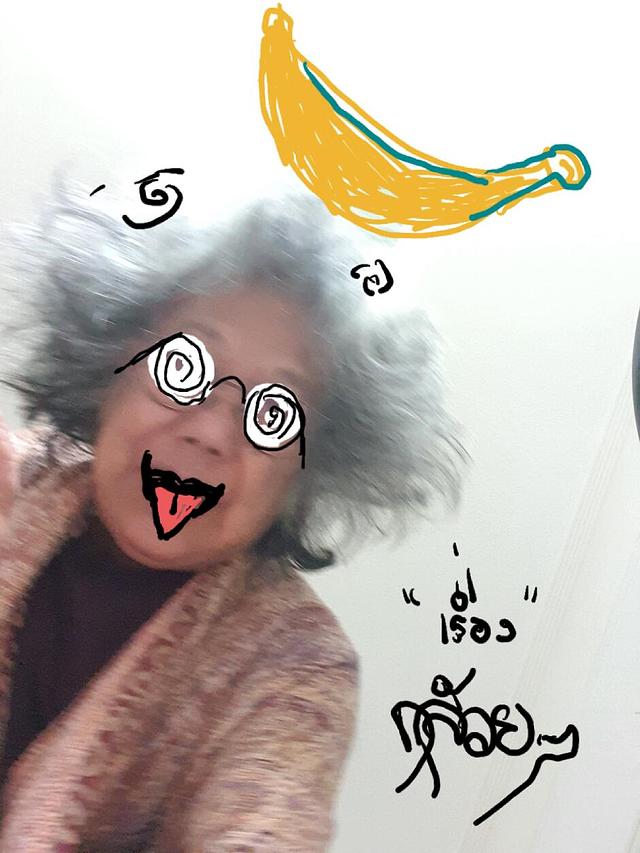


อยากจะ แวะมาบอกกันว่า เรื่องกล้วย ๆ แบบ..ง่ายๆเหมือนปอกกล้วยเข้า..ปาก..นั้น..คงมีลักษณะเดียวกันกับ..เห็นช้างขี้..ขี้ตามช้าง โบราณว่า..ไว้..
เรื่องกล้วยๆที่ว่า..ทำไม่ได้..ๆจริงนะ..กินกล้วย..อยู่ในประเทศที่ปลูกกล้วย ไม่ได้ แต่มี กล้วย ให้คนในประเทศกินเป็น..ว่าเล่น..แถม ราคาถูก ทุก คน ซื้อกินได้..มีโรงเก็บบังคับเวลาสุก ให้ทันขาย ทันกิน..ซ๊ะด้วย….มันเป็นเรื่องปอกกล้วย เข้าปาก อย่าง เห็นจริงเห็นจัง..พอจะ เข้าใจได้ มั้ย เนี่ยะ…
I like the mock-up picture (in the same line as Einstein’s famous picture ;-)
For your “เรื่องกล้วยๆ..”ทำไมถึง..ทำไม่ได้… เป็นต้นว่า อยู่กับ ปัจจุบัน..ขณะ..และถือศีลให้ได้..ห้าข้อ..ต่อวัน”, I would contemplate a clause inside the recital of the Buddhists’ sīla: “..vera manī-sikkha..”(learn -the valuable lesson- to refrain). Sīla is not a set of commandments but (I think) a set of lessons to become more enlightened/happier. Ajahn Cha (late of Wat Nong Pa Pong) had time and time said about learning and practicing <– when you failed, you start again –> .
But he also said “…it is hard to fill a leaky bowl with merits…” meaning (I think) we must at a time “have learned” or “passed” the lesson. We cannot keep learning forever ;-) If we fill ourselves with some wrongs and some rights, what are we?
By Tibetan tradition (again I think) “wrong things are easy to do (and right things are hard to do)”. Why? Because we do wrong things most of the times (and seldom do the right things).
;-)