
Transformational Leadership
Andrew Bryant
Transactional Leadership is classic management - organizing people and resources towards agreed corporate goals. The four elements of transactional leadership are:
- Goal Setting - creating specific, measurable, achievable targets that focus effort in line with the corporate vision.
- Monitoring Performance - making sure goals are achieved. Providing regular performance reviews either in a structured or fluid fashion.
- Providing Feedback - letting people know how they are doing relevant to the target/benchmark. Good feedback must be understood, believed and accepted.
- Developing Careers - By demonstrating genuine interest in others needs, interests and desires. Being able to connect individual aspirations with the needs of the organization.
Transformational Leadership style is where the manager engages with others in such a way that the leader and followers raise one another to higher levels of motivation and purpose. The three elements of transformational leadership are:
- Creating a Vision - motivating, inspiring and influencing others to see a new possibilities for themselves and the company. A clear vision creates passion, commitment and focus.
- Stimulating the Environment - creating a positive and challenging work environment that causes people to think, re-examine their ideas and find creative alternatives. Such an environment breeds imagination and innovation.
- Treating People as Individuals -making people feel valued and encouraging them to contribute. Recognising that people have unique talents, strengths and weakness and allowing for these differences without judgment.
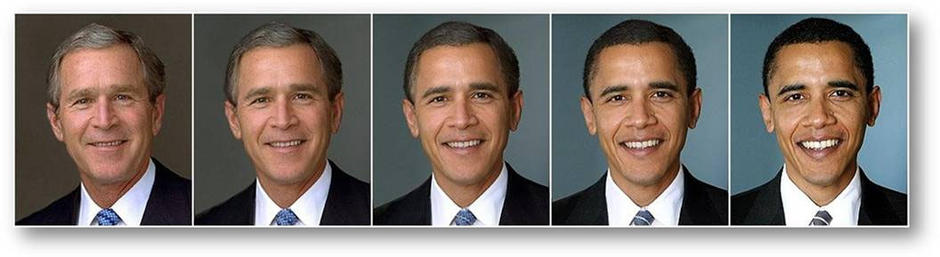
Burns (1978) first introduced the concepts of transformational and transactional leadership in his treatment of political leadership - and I wonder what you think of the graphic I chose and the difference in style between former President George W. Bush and President Barack Obama?
Dear Brilliant Bunjong, Wow! thanks and indeed what a transformation technology has brought about in those photos - from Bush to Obama!!! It would be good to analyse Bush and Obama leadership. I can vouch that Obama has all that it takes to be a great leader. Bush???? You comments , please. Cheers, Merry Mary

 |
Re: Transformational Leadership
|
|
Dear Bunjong, This is a very interesting article. I really like the transformation picture it's really funny. In education there are several other leadership styles and one of the most important style as you mention is the transformation leadership style. I like to add to you article that transformational leadership, which focuses on the importance of teamwork and comprehensive school improvement, as an alternative to other modes of leadership. Transformational leadership is contrasted with: (1) instructional leadership, which encompasses hierarchies and leader supervision and usually excludes teacher development; (2) transactional leadership, which is based on an exchange of services for various kinds of rewards that the leader controls, at least in part. Here's an interesting diagram:
p.s. Thanks for sharing such a wonderful article. Best Regards, |


