
ในบันทึกเกี่ยวกับ ดวงอาทิตย์ทรงกลด
138 : วิเคราะห์ 'อาทิตย์ทรงกลด' ฝีมือ เดย์
ผมได้นำเบื้องหลังมาแสดงให้เห็นแล้วว่า
"กลด" (ร่ม) ของดวงอาทิตย์นั้นเกิดจากการที่แสงอาทิตย์หักเห (refract) ผ่านผลึกน้ำแข็ง
โดยผลึกน้ำแข็งที่ว่านี้มักอยู่ในเมฆซีร์โรสเตตัส (cirrostratus) ซึ่งมีลักษณะคล้ายผ้าบางๆ ปิดหน้าหญิงสาว
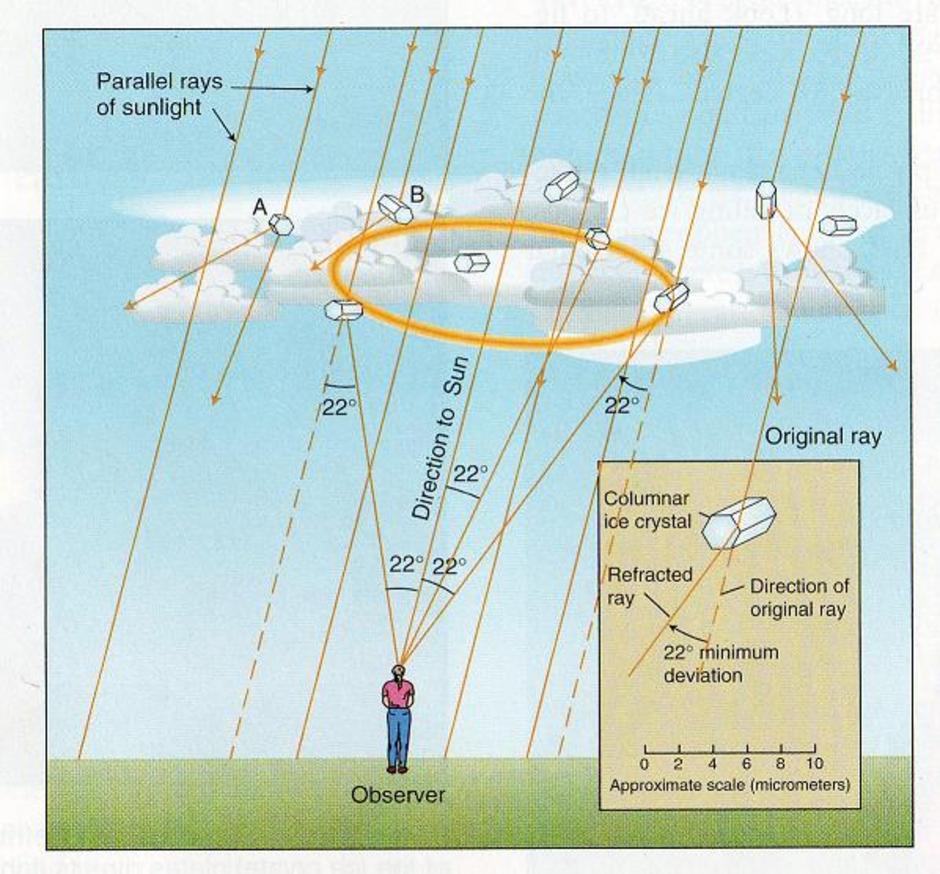
วงสีรุ้งกลมๆ หรือ "กลด" เรียกว่า ฮาโล (halo) นี้อาจเกิดได้ทั้งรอบดวงอาทิตย์ และ ดวงจ้นทร์
ถ้าเป็นดวงอาทิตย์ทรงกลด ก็ solar halo ส่วนดวงจ้นทร์ทรงกลดก็ lunar halo
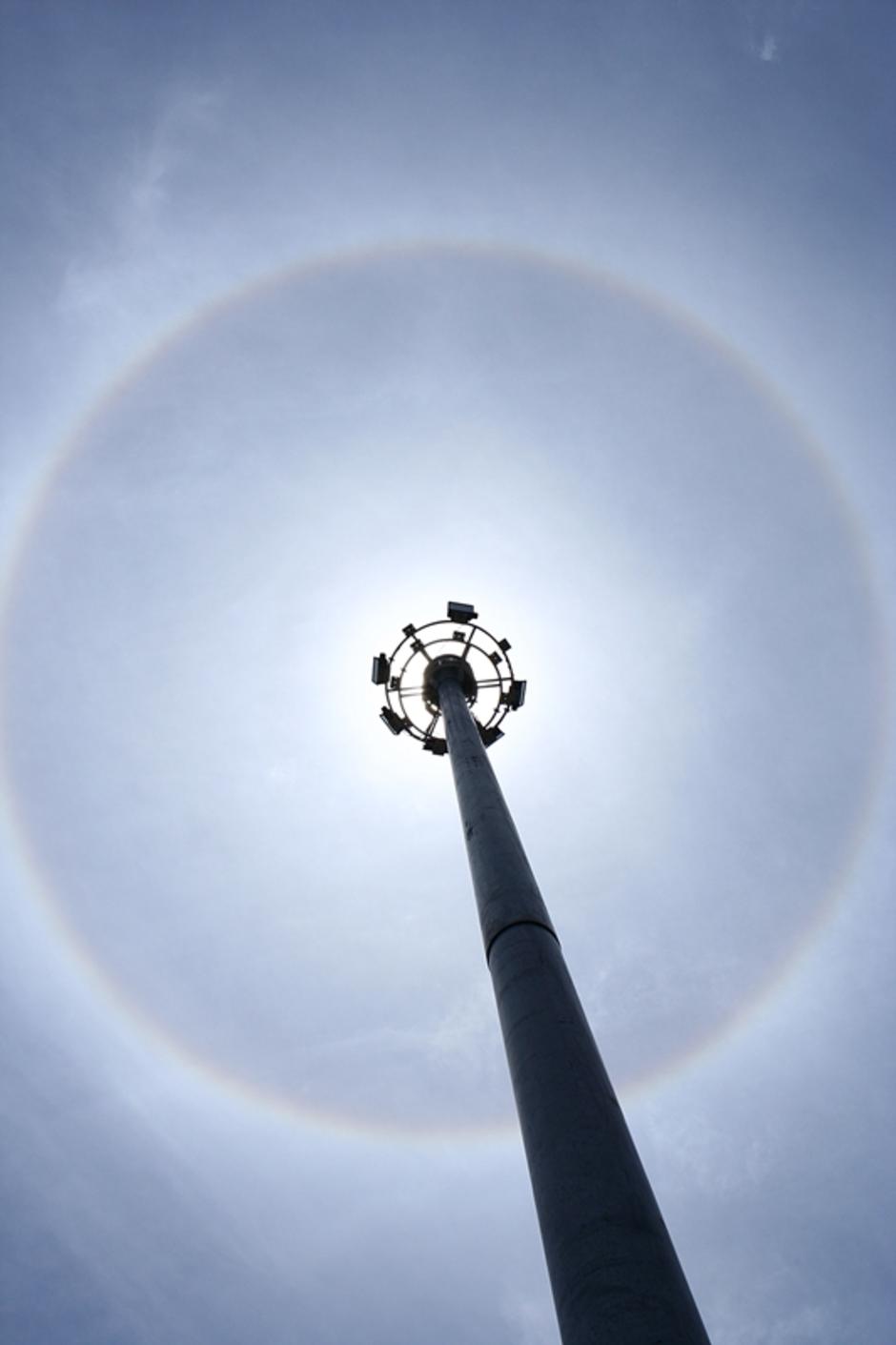
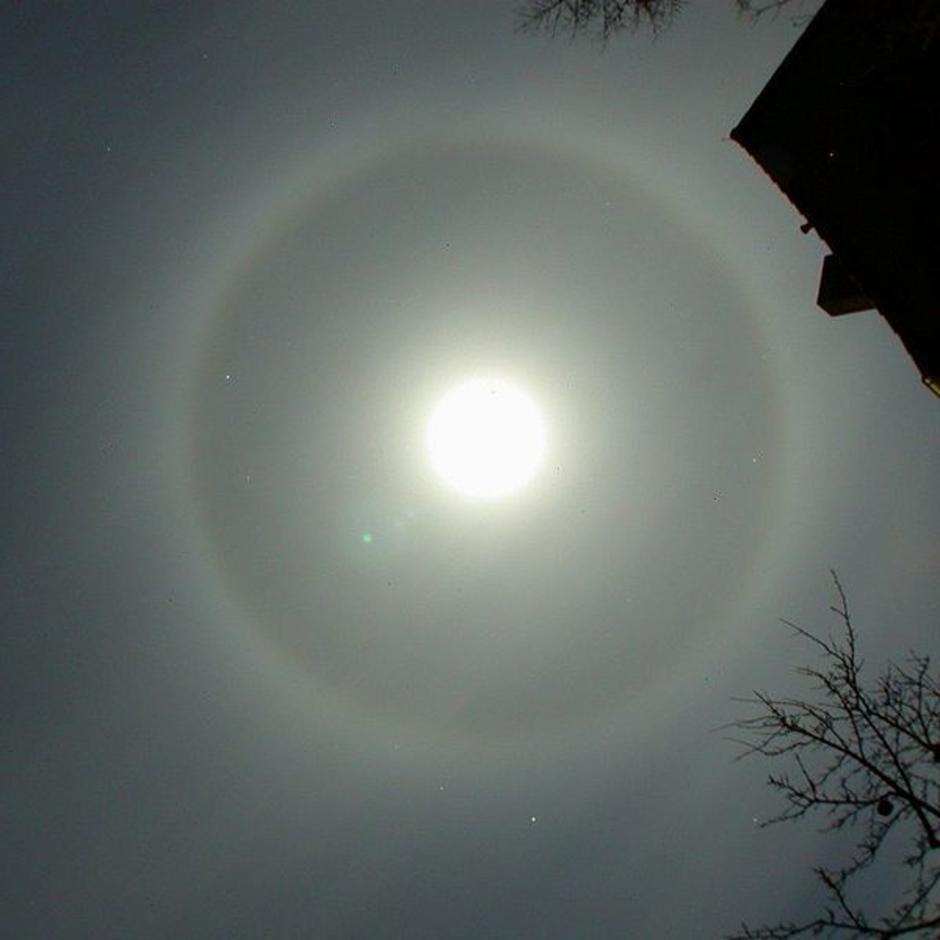
ซ้าย : อาทิตย์ทรงกลดแบบฮาโล (solar halo) ขวา : จันทร์ทรงกลดแบบฮาโล (lunar halo)
คราวนี้มาดูการทรงกลดอีกแบบกัน
เรียกว่า
โคโรนา (corona)
เริ่มจากน้องดวงจันทร์กันก่อน
ดวงจัทร์ทรงกลดแบบโคโรนา (lunar corona หรือ moon corona)
มีลักษณะแบบนี้ครับ

โคโรนาของดวงจันทร์ [ที่มาของภาพ]
ดวงจ้นทร์ทรงกลดแบบโคโรนา ส่วนมากเกิดจากหยดน้ำในเมฆ
(หมายความว่า การทรงกลดแบบนี้อาจเกิดจากอนุภาคแบบอื่น เช่น ผลึกน้ำแข็ง ฝุ่น หรือแม้แต่ละอองเกสรดอกไม้ ก็ได้ แต่เกิดไม่บ่อยเท่า)
โดยหากหยดน้ำมีขนาดเท่ากันทั้งหมด วงสีรุ้งก็จะมีหลายวงชัดเจน อย่างภาพข้างบน
พจนานุกรม A Dictionary of Weather (ในหนังสือชุด Oxford Paperback Reference) เขียนโดย Storm Dunlop ให้คำจำกัดความไว้ว่า [หน้า 66]
corona [Latin: 'crown'] 1. An optical phenomenon consisting of one or more sets of coloured rings that surround the Sun or Moon. The rings are produced by *diffraction by water droplets in thin *stratiform cloud. A full corona shows an inner *aureole and an outer set (or sets) of rings ranging in colour from violet on the inside to red on the outside. Uniform drop size gives the purest colours, but when there is a wide range of sizes only the aureole may be visible. The radius of a corona is inversely proportional to the droplet size.
เอกสาร International Cloud Atlas Volume I (Revised edition 1975) : Manual on the Observation of Clouds and other Meteors ของ WMO (World Meteorological Organization) หน้า 122 ให้คำจำกัดความ & คำอธิบายเพิ่มเติมเกี่ยวกับ corona ไว้ดังนี้
(2) CORONA
Definition
One ore more sequences (seldom more than three) of coloured rings of relatively small diameter, centred on the sun or moon.
Commentary
In each sequence the inside ring is violet or blue and the outside ring is red; other colours may occur in between. The innermost sequence usually shows a distinct outer ring of reddish or chestnut colour, called the "aureole", the radius of which is generally not more than 5 degrees.
Coronae are due to the diffraction of light from the luminary, passing through mist, fog or through a thin cloud composed of very small water or ice particles. The radii of the aureole and of the successive, approximately equidistant, red rings are greater the smaller the particles. Except when the particles are very uniform is size, the colours observed in coronae are less pure and fewer than those of rainbows.
Sometimes coronae, seen in cloud, have a distorted form, owing to differences in the size of the particles in various parts of the clouds. Distorted coronae of small radius may also be observed around the moon when not full, because of the crescent or gibbous form of the luminary.
อย่างไรก็ดี กรณีที่เกิดขึ้นบ่อยกว่าก็คือ หยดน้ำมีขนาดมีขนาดใหญ่เล็กปะปนกัน
ทำให้วงแสงก็จะไม่ปรากฏสีรุ้งอย่างเด่นชัด
แต่จะเป็นวงสีขาวอมฟ้าข้างใน โดยมีแสงสีแดงๆ ส้มๆ อยู่ด้านนอก
ลักษณะเช่นนี้ เรียกว่า ออรีโอล (aureole) ซึ่งเป็นบริเวณตรงกลางของโคโรนานั่นเอง
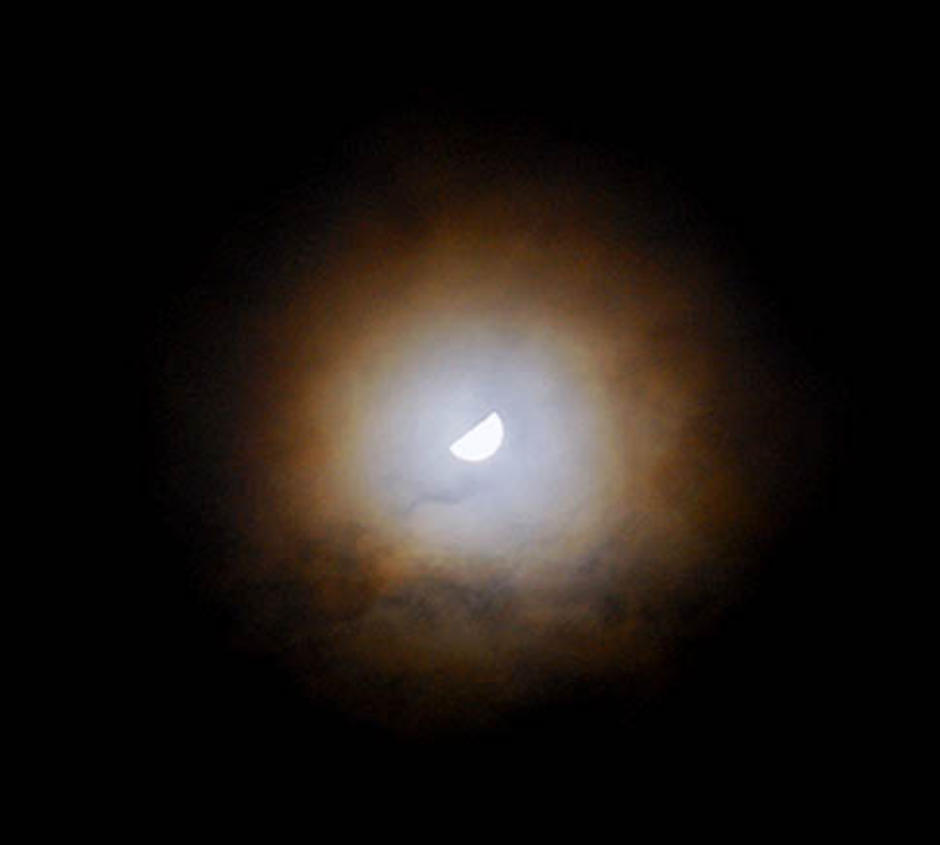
พจนานุกรม A Dictionary of Weather (ในหนังสือชุด Oxford Paperback Reference) เขียนโดย Storm Dunlop ให้คำจำกัดความไว้ว่า [หน้า 23]
aureole The inner portion of a *corona (1) that appears as a bluish-white disk around the Sun or Moon, with a brownish-red outer edge. When the cloud particles causing the *diffraction cover a wide range of sizes, rather than being uniform, the aureole may be the only part of the corona that is visible.
ส่วนพี่ดวงอาทิตย์นั้นก็ทรงกลดแบบโคโรนาได้เช่นกัน
เรียกว่า solar corona หรือ sun corona
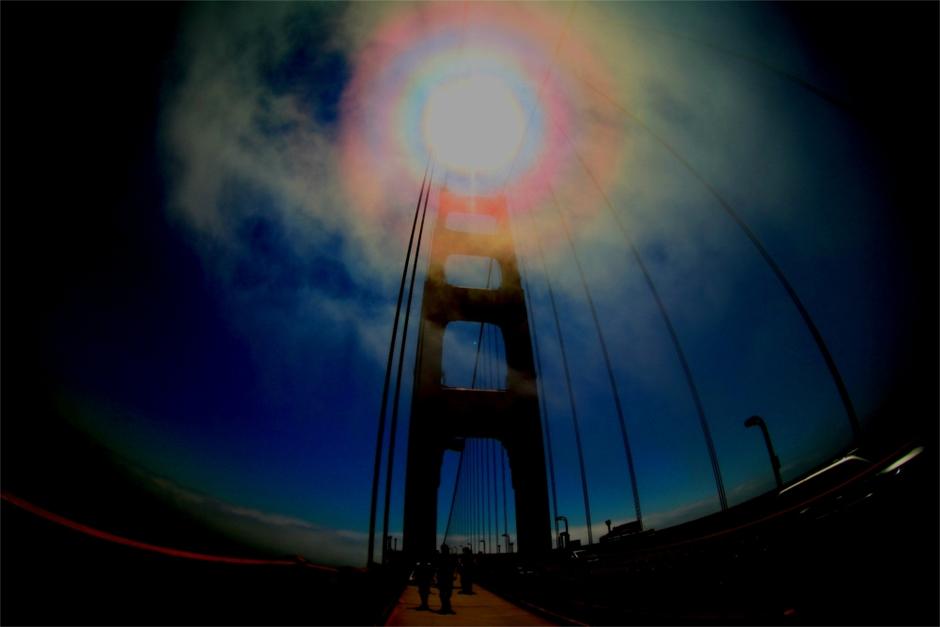
อาทิตย์ทรงกลดแบบโคโรนาเหนือสะพานโกลเดนเกต เกิดจากหมอกหนาบังดวงอาทิตย์
แม้กลดแบบฮาโล (halo) กับกลดแบบโคโรนา (corona) จะเป็นวงเหมือนกัน
แต่กลดทั้งสองแบบก็...ต่างกัน...ตรงที่
1) กลดแบบฮาโลเป็นวงค่อนข้างคมชัด (นึกถึงภาพของเดย์) แต่กลดแบบโคโรนาเป็นวงเบลอๆ ไม่ชัด
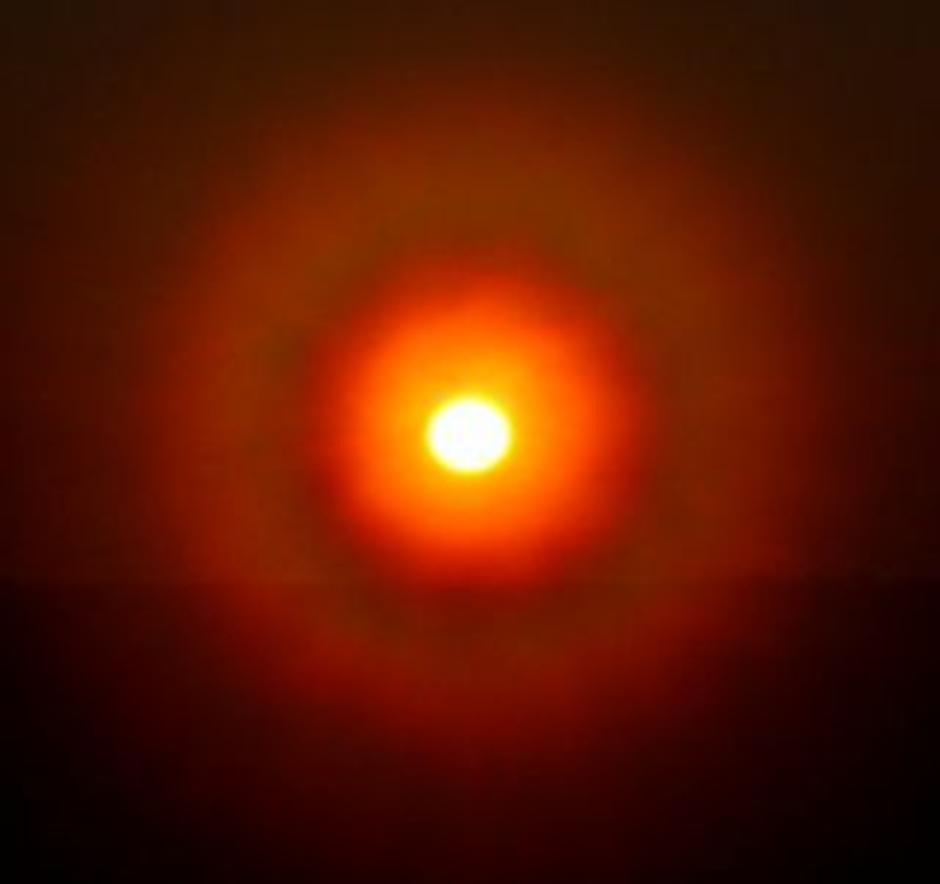
(ซ้าย) halo vs corona (ขวา)
2) กลดแบบฮาโลมีสีแดงอยู่ขอบใน แต่กลดแบบโคโรนามักจะมีสีแดงอยู่ขอบนอก (หรือไม่ก็สีปนๆ กัน)
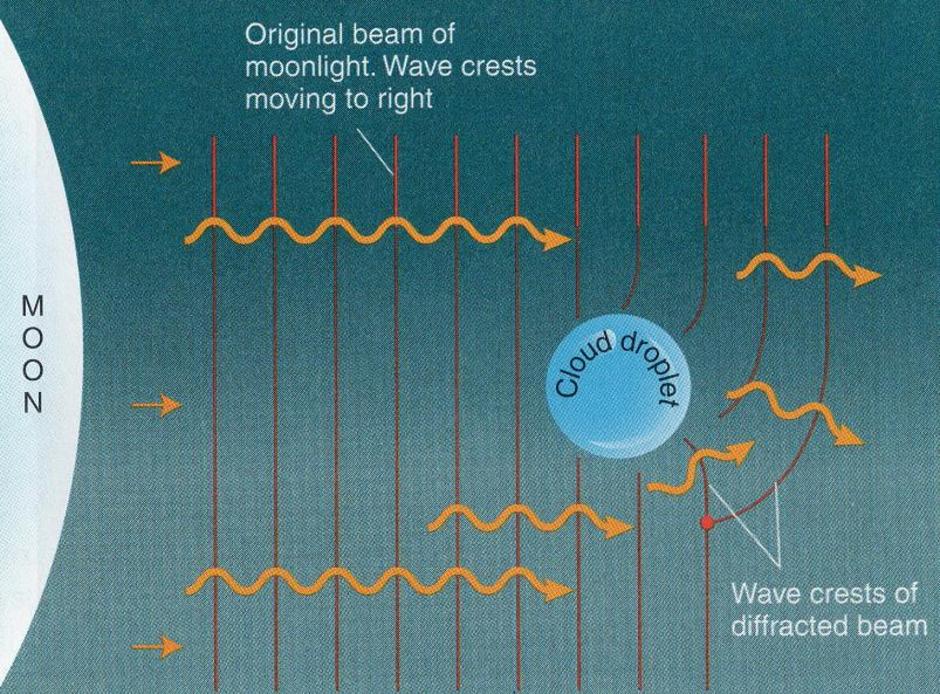
มาดูกันใกล้ๆ ครับว่า หยดน้ำทำให้จันทร์ (หรืออาทิตย์) ทรงกลดแบบโคโรนา ได้ยังไงกัน?
ภาพแรก : แสงจันทราจากซ้ายมือ ส่องมายังโลก บางส่วนจ๊ะเอ๋กับหยดน้ำในอากาศ หรือในเมฆ
ทำให้ทิศทางการเคลื่อนที่เบี่ยงเบนเฉไฉไปจากเดิม
การเบี่ยงเบนเฉไฉนี้ ภาษาฟิสิกส์เรียก (แบบหรูๆ) ว่า "การเลี้ยวเบน" หรือ diffraction (ออกเสียง "ดิ๊ฟ-แฟร็ก-ชั่น)
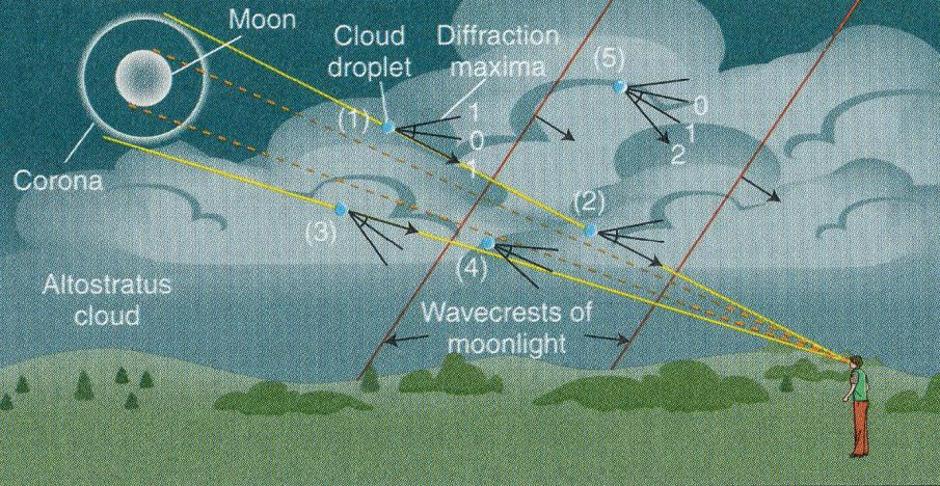
ภาพที่สอง : คิดคลื่นแสงจากดวงจันทราหลายๆ ขบวน แต่ละขบวนเลี้ยวเบนในทิศทางแตกต่างกันไป
ปรากฏว่า คลื่นแสงแต่ละขบวนนี้จะไปผสมผสานกัน (ภาษาฟิสิกส์เรียกว่า แทรกสอด - interfere)
ทำให้บางทิศทางก็สว่างขึ้น....บางทิศทางก็มืดลง...
(ตัวอย่าง : คำว่า Bright, 1st order maxima หมายถึงทิศทางที่สว่างจัดเป็นลำดับที่ 1
ตามมาด้วย Bright, 2nd order maxima ซึ่งสว่างเป็นลำดับที่ 2)

ภาพที่สาม : แสดงคนที่มองเห็นดวงจันทร์ (หรือดวงอาทิตย์ก็ได้) ทรงกลดแบบโคโรนา
สังเกตว่า เมฆที่มักจะทำให้เกิดกลดแบบนี้ คือ อัลโตสเตรตัส (altostratus)
[เปรียบเทียบกับ กลดแบบฮาโล ซึ่งเกิดจาก ซีร์โรสเตรตัส ซึ่งเป็นน้ำแข็ง]
แถมให้อีกนิดหนึ่งคือ
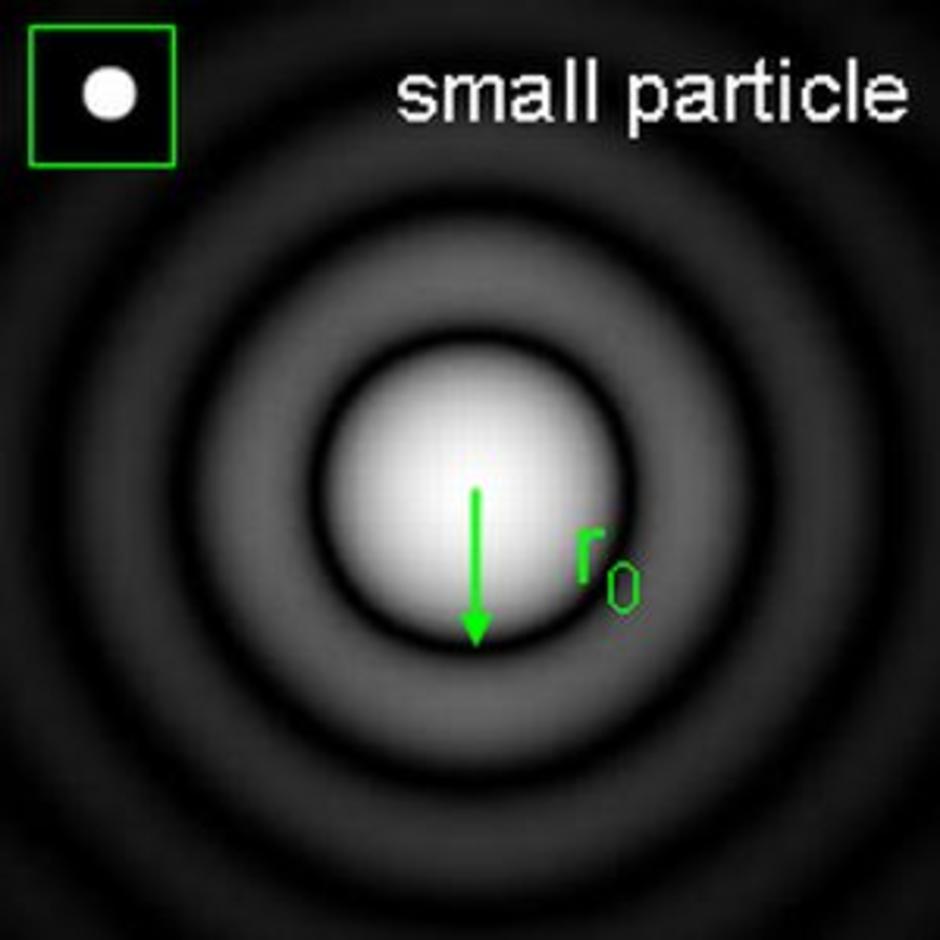
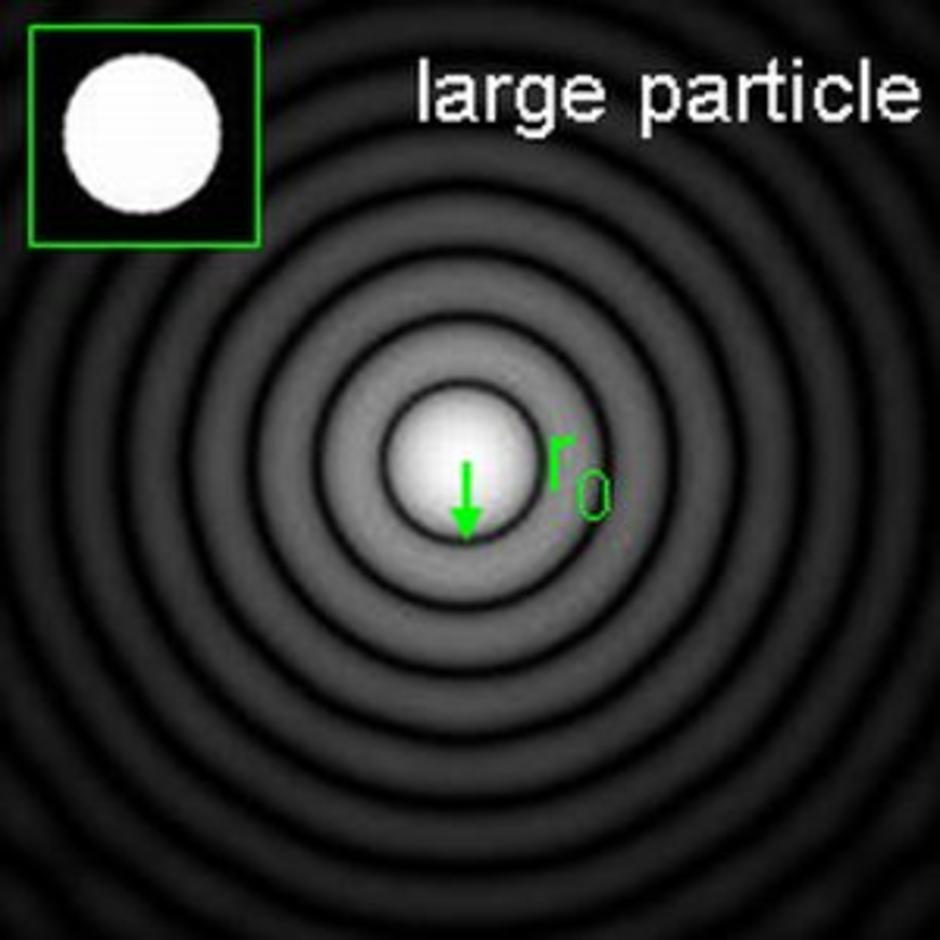
ปรากฏการณ์การเลี้ยวเบน (diffraction) ของคลื่นนี่ สามารถใช้ศึกษาขนาดของผงอนุภาค (เช่น ผงของยาเม็ด หรือผงเซรามิก) ได้ด้วย
โดยเม็ดผงเล็กๆ จะให้วงๆ ค่อนข้างหยาบ
ส่วนเม็ดผงใหญ่ๆ จะให้วงๆ ค่อนข้างละเอียด
เรื่องนี้ไม่ไกลตัวเลย
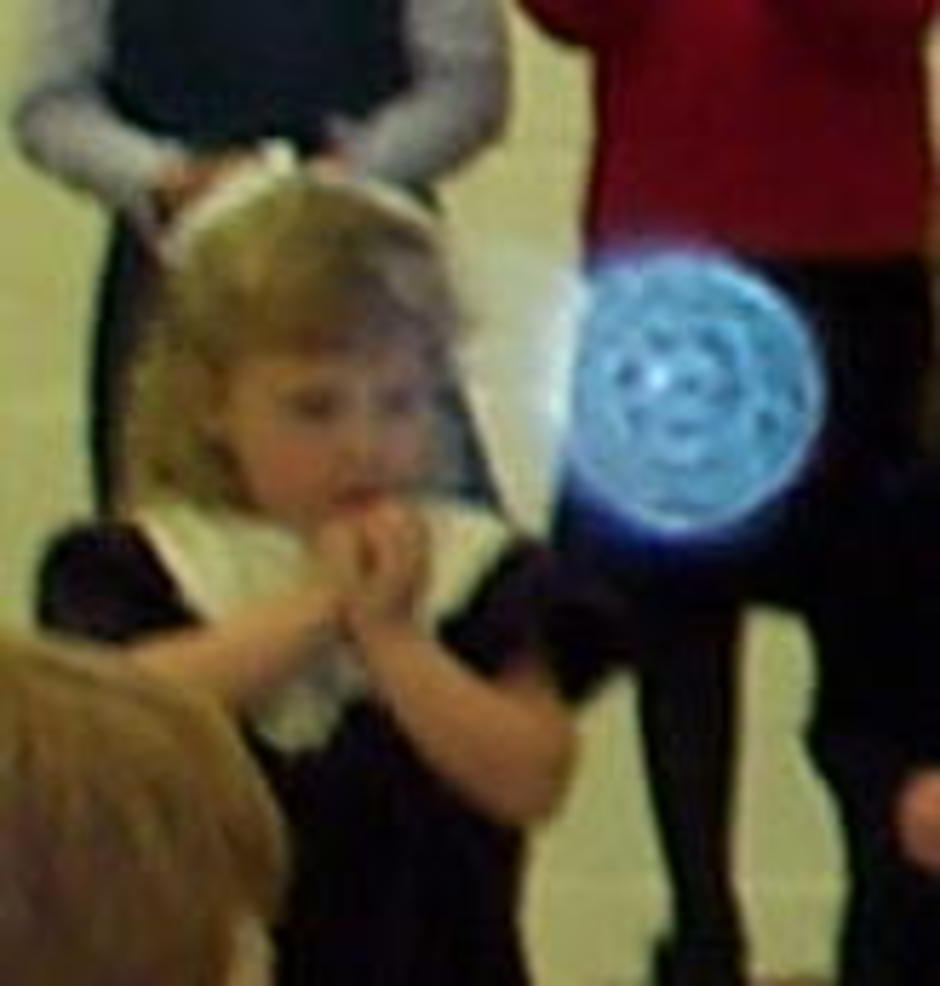
เพราะว่า ปรากฏการณ์วงแสงจตุคามรามเทพ ที่เคยฮือฮากันมาพักหนึ่งนั้น
ก็เกิดจากปรากฏการณ์เดี่ยวก้นนี้นี่เอง!
สนใจไปอ่านต่อได้ที่บันทึกนี้ครับ
ฟิสิกส์เบื้องหลัง 'ภาพวงกลมจตุคามฯ'
เอวังก็มีด้วยประการฉะนี้!
(เทศน์ซะยาวเชียวบันทึกนี้...อ้าว! ตื่น...ตื่น...ได้แล้วคร้าบ! อิอิ)


พี่ชิวสู้ๆ รออ่านแบบเต็มรูปแบบคร๊าบ ^^
และจะมาใหม่ ;)
Hello เดย์
เรียบร้อยครับงานนี้...ทำเอาคนอ่านหลับคาจอได้หลายคนแน่ๆ 555
เดี๋ยวพี่ไปตามคุณ Wanpen (เจ้าหนี้) มารับชำระหนี้ (บันทึกนี้) ก่อนนะคร้าบ...ฟิ้วววว....
สวัสดีค่ะ พี่ชิว เนื้อหาละเอียด ละเอียด พี่ชิว ... ตั้งใจอ่านมาก ... ขมองสว่นจิตนาการทำงานช้า มาก อ่านไป 2 รอบแล้วค่ะ พี่ชิวเขียนให้อ่านแล้ว ขำ อมยิ้ม ... ลืมเนื้อหากลับขึ้นไปอ่านใหม่อีก ...
คิดว่าบันทึกนี้ของพี่ชิว หนูคงแวะมา มากกว่า 100 ครั้งแน่เลย ... ไม่ต้องสงสัยถ้าสถิติมันจะขึ้นไปสูงนิดหนึ่งพี่ชิว หนูเองค่ะ ปั่นบล็อก
ขอบคุณพี่ชิวสำหรับความรู้มาแบ่งปันค่ะ
หนุ่ย
http://www.oknation.net/blog/tigerjun/2009/07/10/entry-1
พี่ชิว ผมเอาภาพเมฆ ฝนตก และพระอาทิตย์ตก ลงในบล๊อก ขอเชิญอาจารย์ไปชมด้วยครับ
ภาพที่ 2 เดินออกมาทำงานเจอเรียงตัวกันสวยดี เวลา 8.00 น. ค่ะ
ภาพที่ 3 เมื่อบ่ายวันนี้เองค่ะ หามุมถ่ายยากเพราะว่านอกตึกตรงที่ยืนถ่ายรูปฝนตกค่ะ แต่อีกฟากนึงของฟ้า เป็นแบบนี้ค่ะ
ดูแนวตั้งค่ะ
เดี๋ยวนี้พอเห็นภาพเมฆแปลกตาก็คิดถึงสมาชิกชมรมคนหลงรักมวลเมฆค่ะ
ขอบคุณมากค่ะ หัวหน้าแก๊งค์
สวัสดีครับ หนุ่ย
ปั่นบล็อกให้สถิติขึ้นบ่อยๆ แต่ได้ความรู้ทีละนิดกลับไปนี่ไม่เป็นไรครับ
แต่อย่าไป "ปั่นหุ้น" เชียว เดี๋ยว กลต. ตามล่าตัวแน่! ;-)
อ่านบันทึกนี้แล้ว อย่าลืมแวะไปชมวงแสงจตุคามฯ ด้วยนะครับ แม้จะเลิกฮิตไปแล้ว แต่ไม่แน่ว่าวันดีคืนร้าย...อาจจะกลับมาอาละวาดอีกนะเออ!
สวัสดีครับ เสือจุ่น
เดี๋ยวจะตามไปชมแน่ๆ ครับ ถ้าไปได้กับบล็อกนี้ อาจจะขอลิขสิทธิ์ดูดมาไว้แถวนี้ซะเลย...อิอิ ขอบคุณครับ
สวัสดีครับ คุณ Wanpen
โอ้โห! เมฆถูกใจทั้งนั้นเลย โดยเฉพาะภาพแรก...ซีร์โรคิวมูลัส(cirrocumulus) ซึ่งหาชมยากมากทีเดียว (ฮั่นแน่! รู้แล้วใช่ไหมครับว่าเดี๋ยวจะไปขอภาพความละเอียดสูงมาไว้แถวๆ นี้แน่ๆ ^__^)
ภาพที่ 2 นี่ก็เกือบจะคล้ายๆ เมฆปลาแมคเคอเรลแล้วครับ นี่ไงครับ
ลวดลายสลับกันแบบนี้ให้เราชม
บันทึก : 014 : ชวนดู 'เมฆลายปลา'
มาเรียนรู้ค่ะ
ธรรมชาตินี่มีความมหัศจรรย์ให้เราพบเห็นทุกเมื่อนะคะ
เอาเมฆมาฝากในบันทึกของอ.นะคะ
ขอบคุณค่ะ
สวัสดีครับ คุณ Wanpen
ภาพเมฆที่ส่งมานี่แบบรวมมิตรเชียวครับ มีเมฆอย่างน้อยตั้ง 3 ชนิดเชียว! ขอบคุณมากครับ ^__^
สวัสดีครับ ครูต้อย
ธรรมชาตินี่ขนาดเราไม่รู้ ยังน่าสนใจ แต่พอรู้บางแง่มุม ก็น่าสนใจขึ้นไปอีก ยิ่งถ้าเชื่อมโยงกับเรื่องอื่นๆ ได้ ยิ่งน่าสนใจเป็นที่สุดครับ
เมฆฝนทะมึนที่นำมาฝากนี่ ถ้าเป็นชาวไร่ชาวนาน่าจะชอบใจนะครับ ชุ่มชื่นดี แต่ถ้าเป็นคนเมือง อาจจะบ่นว่าทำให้รถติด...อิอิ
พี่ชิวค่ะ
อาร์มกลับมาอ่านบันทึกนี้อีกครั้งเพื่อที่จะบอกว่า เมื่อคืนที่หาดใหญ่เวลาประมาณสามทุ่มนิดๆ ได้เห็นดวงจ้นทร์ทรงกลดแบบโคโรนาด้วยค่ะ เสียดายที่กล้องดิจิตอลธรรมดาไม่สามารถถ่ายภาพออกมาได้อย่างชัดเจนค่ะ