
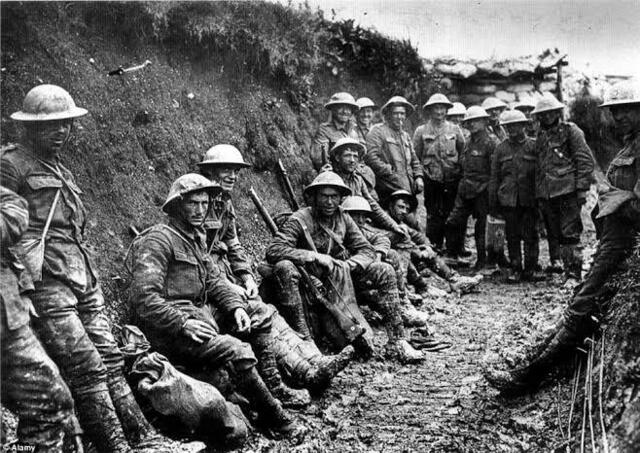
World War I, also known as "The Great War," began in 1914 and ended in 1918. The key event that triggered this war was the assassination of Archduke Franz Ferdinand of Austria-Hungary on June 28, 1914, by Gavrilo Princip, a Bosnian Serb nationalist, in Sarajevo.
This assassination created significant political tension between Austria-Hungary and Serbia. Austria-Hungary issued an ultimatum to Serbia with several demands, most of which Serbia accepted, except for a few that infringed on its sovereignty. Consequently, Austria-Hungary declared war on Serbia on July 28, 1914.
This event set off a chain reaction involving the major European powers through a complex web of alliances. Germany sided with Austria-Hungary, while Russia supported Serbia. France and the United Kingdom were then drawn into the conflict as well.
Thus, while the assassination of Archduke Franz Ferdinand was the immediate catalyst for World War I, underlying factors such as power rivalries, militarization, and intricate alliances contributed to the escalation into a global conflict.


