
เอกลักษณ์ของชาวนา
This morning I stumbled on this
http://thaipost.net/?q=ถวายสักการะหน้าพระบรมโกศ เปลว สีเงิน Nov3, 2016
... การ "ทำนา" เป็นทั้งศาสตร์และศิลป์
ทุกขั้นตอน เป็นผลึก "วัฒนธรรม-ประเพณี" วิถีชาติไทย นับตั้งแต่ขั้นตอน ไถ หว่าน ปักดำ ตกรวง เก็บเกี่ยว ขึ้นลานนวด เข้ายุ้งฉาง
ลองพินิจ จะพบว่า.......
ทำนากันก็หลายชาติ แต่นาวิถีไทย ที่ไหนในโลกเหมือน?
และสิ่งนั้น "สร้างมูลค่าเพิ่ม" ทางการท่องเที่ยวได้
แต่เรา...ทิ้ง!?
ตั้งแต่ขี่ควายไถนา ปักดำกล้า น้ำมา..นาเป็นทุ่งรวงทอง ลอยเรือเล่นเพลง ขายได้ไปจนถึง ลงแขกเกี่ยวข้าว นวดข้าว ทำขวัญแม่โพสพ
จะเห็นว่าการทำนา "คงเอกลักษณ์" ไม่ใช่แค่ข้าวที่ขายได้
ทุกขั้นตอน ขายได้หมด!...
and
"มิติใหม่" ของพาณิชย์ เพื่ออนาคตชาวไร่-ชาวนา (by อธิบดีกรมพัฒนาธุรกิจการค้าและโฆษกกระทรวงพาณิชย์ on the same webpage).
It now appears that ชาวนา (rice farmers) have lost their identity and become คนปลูกข้าว (rice growers) in our new vision for ‘new economy’. We have lost the rice farmers’ culture and tradition and ‘way of life’. We have now ‘for profit’ rice growers doing every which way to make a buck from rice (even to the point that ‘market situations’ is manipulated politically).
To regain their identity and rebuild their unique way of life and to become proud of their passion (not just profession) again should now be their primary goal - the reason for existence. No more image of being victims of oppression, riding along progression, aging out to extinction. No more third class professionals or citizens in technology-ridden society…
The ‘new’ image and identity is of proudly independent, environmentally savy and astute, all-round engineers and philosophers, keepers of culture and tradition. It is time to stand proud and say “we are rice farmers”. And that says all.
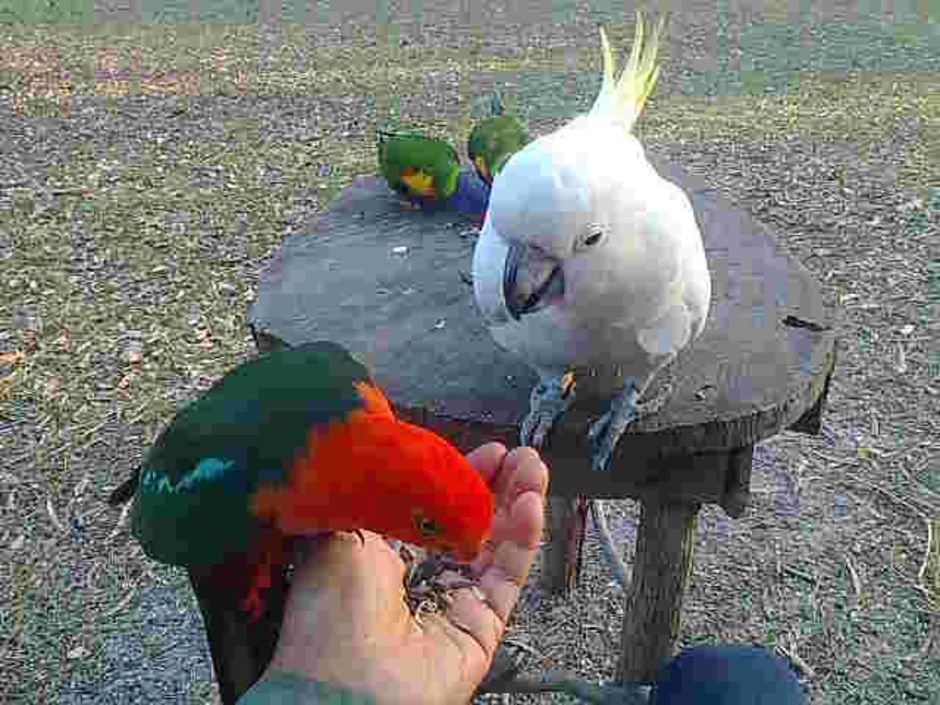
[Inline: A chain of feeding in an industry is very much like this - the middle has the biggest share.]
PS. A little math problem for those who love problem solving.
From a Thai PBS3 news edtion shown on SBS2 (Aus) Nov 2, 2016:
The cost of paddy rice (ข้าวเปลือก) is 30% of the price of [husked] rice (ข้าวสาร) at shops or supermarkets. Rice [product] packagers claim (on TV) that their profit margin is only 5% of the final (sale) price.
So we have equations
(1) cost of raw material c = 0.30 price of product P —> c = 0.30P
(2) profit margin m = 0.05 price of product P —> m = 0.05P
Adding (1) and (2) —> (c+m) = 0.35P and ---> hidden costs H = 0.65P
If we pay 30 Baht for a kilo bag of rice at a supermarket, what are the cost of paddy rice (c, the maximum that rice farmers get), the packagers’ profit magin (m, the minimum that rice traders get), and hidden marketing money (like milling, packaging, transporting, shelving, advertising,…,tax, VAT,…). And look at the 5% profit margin of the product price again. It is the profit on cost of paddy rice - the raw material and on every item of hidden marketing/selling costs (including taxes). So we are paying to keep an economy going. Not just the rice farmers and sellers. The problem is how rice farmers can increase their income and wellbeing. (Their share is 30% much less than the 65% they generate for others in the economy.) The solution would need a clear look at the ‘hidden costs’ and some thinking on how to tap in that 65% of the price that consumers pay. OK your turn now.


เกิดมาเพื่อขายๆๆทุกสิ่งทุกอย่าง..แม้แต่ข้าวที่ปลูกไว้กิน. แถมแผ่นดินที่ปลูก..จำนองจนหลุด..เออเนอะ..จะออกหัวรึก้อยเหรียญสุดท้ายที่มี..
I come from a long chain of farming families. I know the value of land and living on land.
I have also seen people who sent their kids to schools in BKK. The kids graduated, got jobs in government and/or companies. They came back to ask for their 'inheritance' land so they could sell and buy cars...
Sad but true!
How the price for (export) rice is set - explained in
http://thaipost.net/?q=ทำไมราคาข้าวหอมมะลิลดฮวบ-ใครคือแพะ
Reading it we can see that it is not difficult to manipulate rice price!
Another reason for a Rice Board for rice farmers.
"วรงค์"ลากไส้"ปู"นำข้าวจากโรงสีมาขาย ไม่ใช่ข้าวที่รับซื้อจากชาวนา! [ไทยโพสท์]
ข้าวราคาถูกน่าจะดี แต่กลับเป็นเรื่องไม่ดี ??? [โอเคเนชั่น]
ไม่รอรัฐช่วย! ชาวนาบุรีรัมย์พาลูกเมียกรอกข้าวสารขายริมถนนหน้าบ้าน ได้วันละ 3,000 บาท [ผู้จัดการ]
"ยะใส" ปรามเพื่อไทย อย่าดราม่าเกินงาม แนะรัฐปฏิรูประบบข้าวครบวงจร--- 6 พ.ย. 59 16:51 --- [ไทยรัฐ]
"รัชฎาภรณ์" สวน "หมวดเจี๊ยบ" ซัด พท.ตีสองหน้าสร้างภาพให้ "ปู" สร้างข่าวทำลายรัฐ [ผู้จัดการ]
?ปวิน เสื้อแดง? แขวะข้าวแลกค่าเทอมอีกหน่อยคงจ่ายค่ากะหรี่แทนเงิน ?วัฒนา? ถามแถวไหนรับแลก [ผู้จัดการ]